
February 4, 2025
(clucking): “I feel an article coming on”
“What’s that got to do with the price of eggs?”

There’s no way to ignore it. Even if you look the other way when you pass the refrigerated case in the supermarket or you eliminate any fast food item from consideration that includes the word – egg prices are going up as fast as the launch vehicles that are being tested for the new era of space travel.
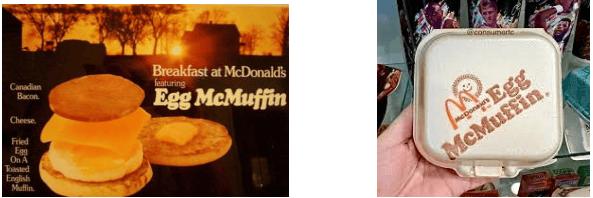
There was a time when a callow bachelor, bereft of culinary skills, could run through a drive-thru lane to get an inexpensive, filling breakfast substitute on his daily struggle to clock in at work before the shift started. Will he now have to survive on an “Eggless McMuffin?”
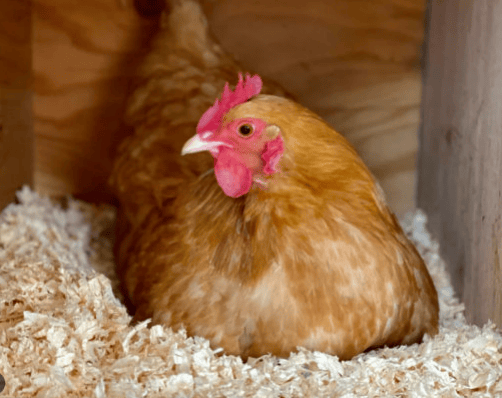
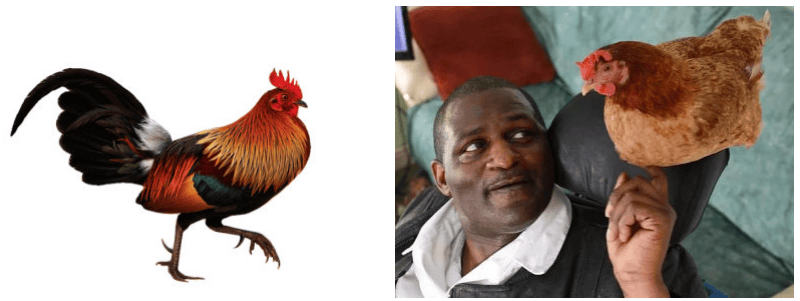
Callow bachelors and other humans have had an intimate relationship (unfortunately, predator-prey) with the single species, Gallus gallus, the red junglefowl, which we gradually bred into an egg-laying machine, the chicken, G. g. domesticus. Recent studies have pinpointed the beginning of that relationship to about 3,500 years ago in central Thailand. The birds were lured out of the trees by the abundant crops in rice fields, which simulated the mass flowering and seed production of bamboos to which the fowl were adapted. Rice farmers moved to confine and care for the obliging fowl, ultimately harvesting two appealing sources of protein to complement their rice. Men and chickens have stuck together ever since, though there have been some rocky moments in the relationship.
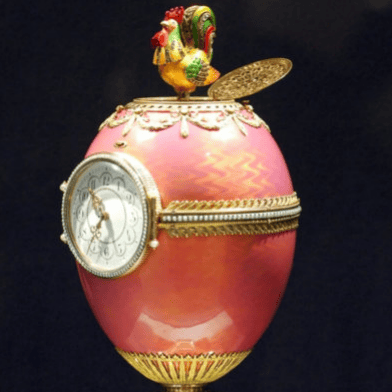
Leaving aside discussion of the meat, men invented countless ways to savor the other product of the relationship – the egg. From omelettes, to custards, to 1,000 year old eggs, to meringues . . . eggs excited the human imagination to create ways to please the human palate. In 1903, Auguste Escoffier offered 143 brilliant recipes to use this basic food in his Guide Culinaire, though the McMuffin was not among them.
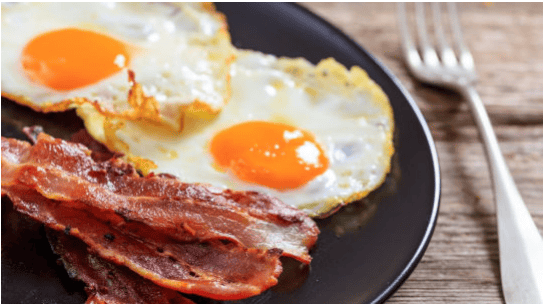
By the 1960s, medical researchers were warning that eggs (yolks) were a concentrated source of cholesterol – a substance that caused cardiovascular disease in its consumer. The American Heart Association recommended that individuals eat no more than three eggs per week. Sixty years of further studies have suggested causative links to diabetes and some forms of cancer and have been vigorously disputed by the conclusions of competing studies. In 1999, the Journal of the American Medical Association published a study finding no link between eating eggs and cardiovascular disease. The public’s view of the benefits and risks of eating eggs swung back and forth with each announcement, leaving the individual with the responsibility of making his own determination – hard to do when a plate with two succulent sunny-side-ups and crispy rashers of bacon is sitting within a fork’s reach.
That decision has become easier to make as the price of eggs has soared. We’re living in an era when the prices of foodstuffs and household goods have been on a continual ascent, affecting our economy and our politics, as well as our ability to eke out a tolerable life. Producers and sellers have used transitory incidents to explain the necessity of the price increases – a bird flu epidemic is the latest – but something else is at work here. The prices aren’t dropping when the threats have passed. In time, conditions will work themselves out, inevitably at our expense.
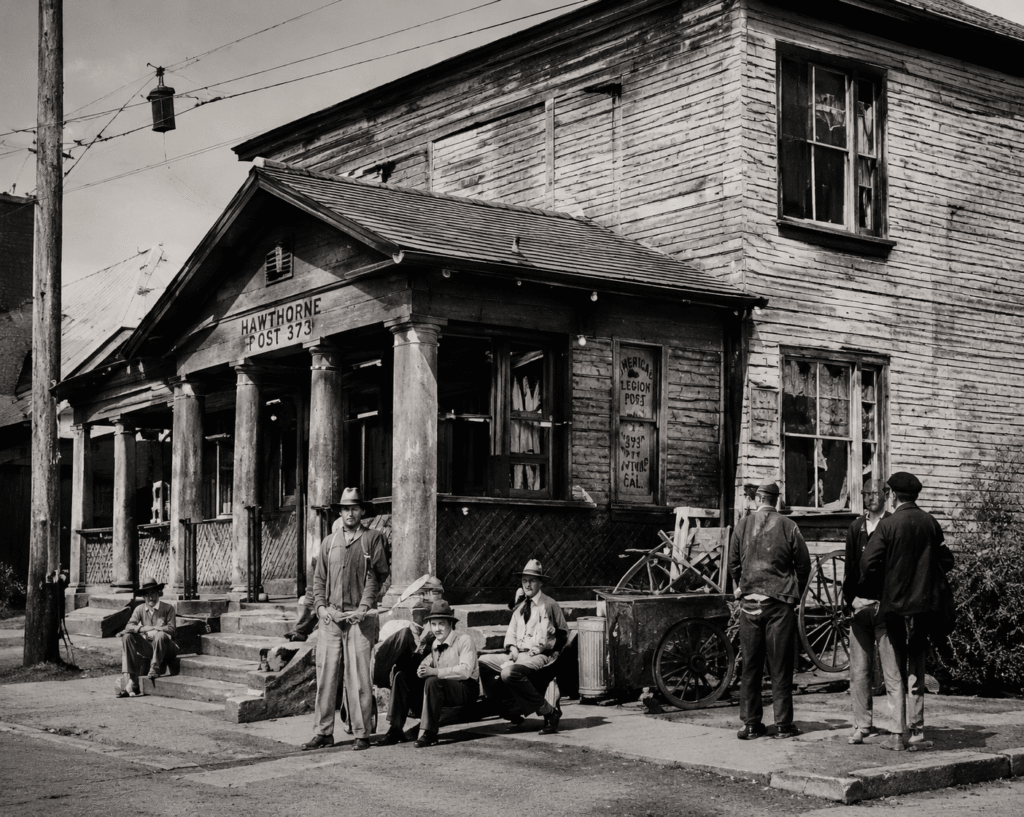
If only we could revive a solution from our own past. The township of Hawthorne was developed and presented as good land within the means of ordinary working people. Lots were offered at reasonable prices and could be financed on favorable terms. The first promoters and realtors were quick to suggest that new homes might include small scale agricultural enterprises to augment the income of the new landowners and to ease the commitment to making payments.
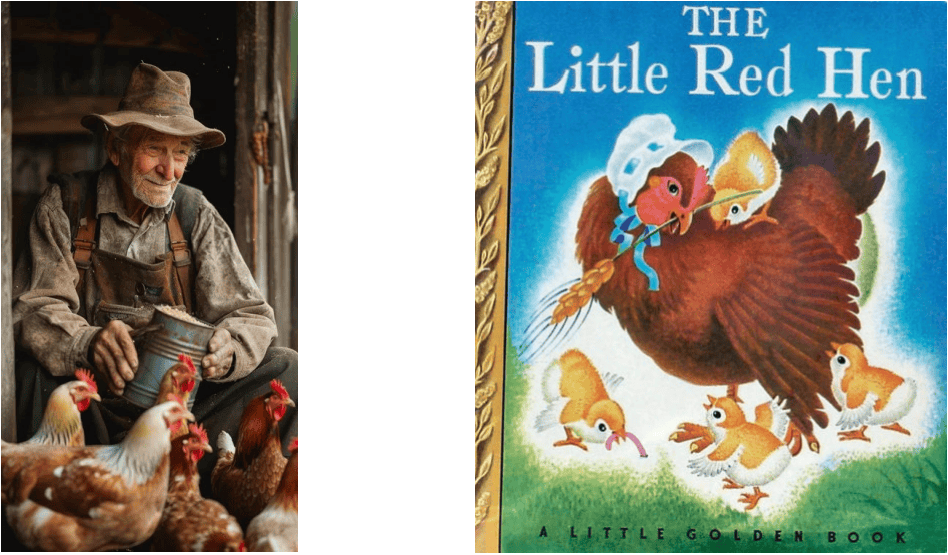
A sales brochure printed by the Hawthorne Land Company in 1906 told potential buyers they would find “a remarkably rich soil which is highly adaptable to truck gardening and fruit raising. We strongly recommend poultry raising at Hawthorne because of its climatic conditions. Two of the largest poultry ranches in Southern California are located in our immediate vicinity.” Douglas Robertson reminisced about working at one of them, Slinack Egg Farms, located at Bellevue (now Imperial Hwy) and Inglewood Ave, as a 1920s schoolboy, where he helped care for 10,000 laying hens. The processed eggs were “sent to the central wholesale markets of Los Angeles . . . . Each day I was permitted to take a dozen of these fresh eggs home for family consumption.” In the opposite direction, Hawthorne home poultry ranchers could sell their products to nearby large producers. Can you imagine what a resource like that would do for Hawthorne consumers today? Inexpensive, just-gathered fresh eggs from your neighbors.
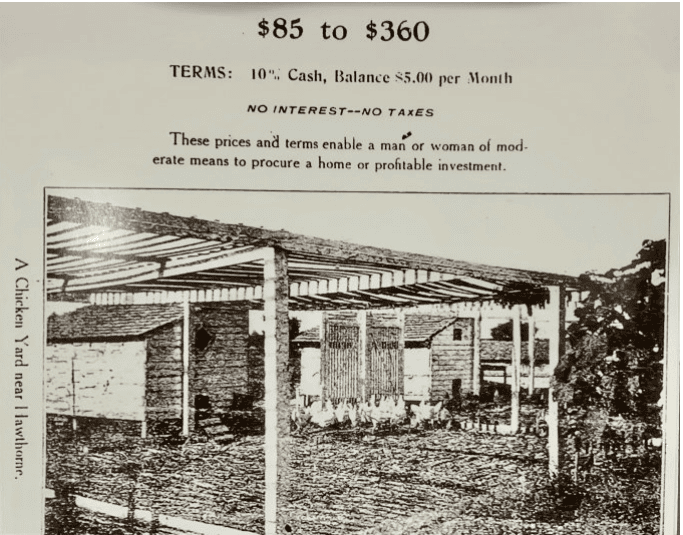
The remnants of the fresh egg industry survived in our city into the 1960s. Some will remember a small store at 1221 S. (near now 13849) Hawthorne Blvd, Hawthorne Egg Town, which limited its offering to fresh eggs and chicken and employed lucky schoolboys to make deliveries by bicycle. Though no one who has experienced a commercial egg production facility “up close and personal” would recommend the establishment of one in modern residential Hawthorne, unconfirmed internet entries suggest that Hawthorne residents can keep up to ten hens and no crowing roosters on their properties, but check with City of Hawthorne authorities first!
Maybe, the sky is not falling, after all.