

🎵When Autumn Leaves start to fall . . .
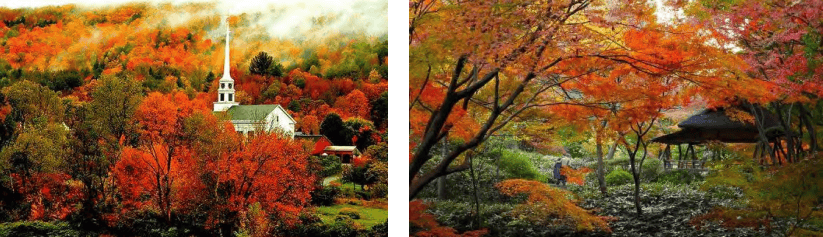
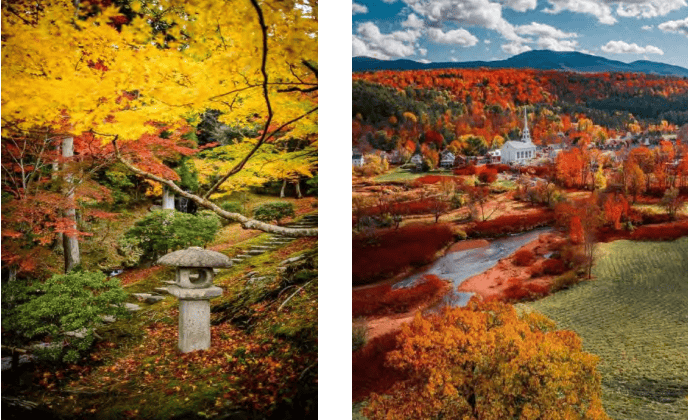
As the Earth makes a left turn to get back to the place where the New Year starts, we have a gentler season to immerse ourselves in – a time to harvest, a time to prepare, a time to watch the days shorten. We might also watch out for that showpiece of this time of the year, the fall foliage – the changing of the leaf color on some of the trees in our surroundings.
Humans often think of trees as props on the great stage set of their lives, but trees are complex living organisms, too. Trees can grow larger and live longer than any of us twolegged mammals and can perform the life functions we do, without having to move around (you’ll never see a tree waiting to recharge a battery at an EV charging station). Trees can face all the changes to their environment where they stand.
One adaptation they can use is the slow reduction and degradation of chlorophyll – the green in their leaves – as an approaching winter makes the process of changing sunlight and carbon dioxide into tree food unprofitable. Chlorophyll is the chemical compound in the leaves that accomplishes this reaction. As it diminishes, other compounds, carotenoids and anthocyanins, show through, making the leaves a festival of bright colors before the tree abandons its foliage in another energy-saving strategy for winter.
You’re right – this doesn’t happen in coastal Southern California where the winter climate is kind toward our native trees, but humans have been, for eons, so enthralled by this phenomenon, they have brought color-changing trees from their other homelands to replicate the spectacle here. They observed which trees, evolved to make the seasonal change, would grow in this temperate basin by the sea and give them a glimpse of the Fall they remembered.
A few of the best trees for Hawthorne are the Sweetgum or Liquidambar, Liquidambar styraciflua, the Chinese pistache, Pistacia chinensis and the Ginkgo or Maidenhair tree, Ginkgo biloba. If you wander around the city in October or November, you’ll find specimens that residents and others have cultivated to give themselves and us the pleasure of this seasonal performance. And for the Big Show, you can plan a trip to New England, Japan and other places around the world to see a natural wonder that puts our puny works in perspective.
[French poet Jacques Prévert’s work “Les feuilles mortes” was set to music by Joseph Kosma in 1945. Titled “Autumn Leaves,” pianist Roger Williams’ instrumental arrangement of the song, wit its evocative descending arpeggios, was the best-selling American recording of 1955. Johnny Mercer created an English version of the lyric in 1950 and it was covered by many popular singers, including Nat King Cole in 1955. The song was used in and inspired the title of a 1956 movie starring Joan Crawford. It has become a worldwide jazz standard]
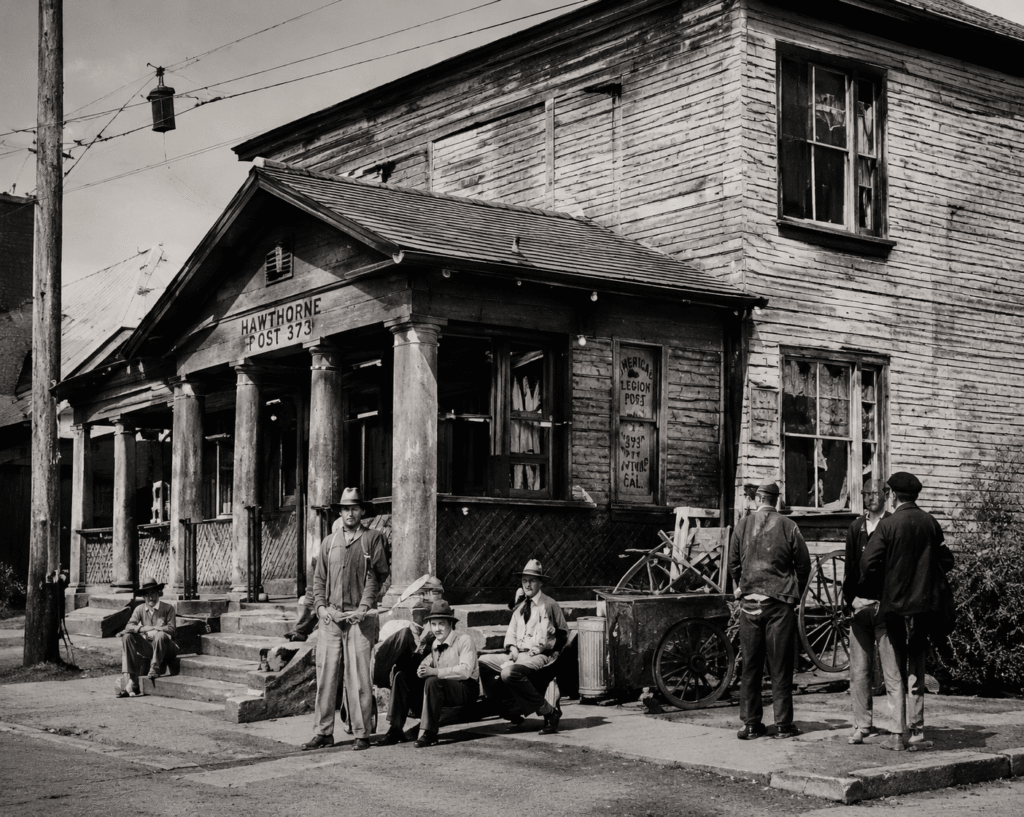
The Legacy of Hawthorne:
From Sundown Town to Modern Community
Hawthorne, California, is a city that has evolved dramatically since its founding in 1905, yetthe shadows of its past continue to influence its present. Once labeled a “sundown town,”Hawthorne was a place where racial segregation was enforced through both societal norms and explicit warnings. Signs that declared “No African Americans Allowed After Sundown” served as stark reminders of the racial barriers that defined the community for decades. This controversial history has left a lasting impact on Hawthorne, shaping not only its demographics but also the relationships among its residents.
The implications of being a sundown town were profound. For many years, African Americans were systematically excluded from the opportunities and freedoms afforded to their white counterparts. The societal impact of these signs reached far beyond mere restrictions; they instilled fear and fostered a climate of hostility. Families were forced to leave their homes, businesses, and communities at dusk, leading to a fractured social fabric that would take generations to mend. The long-term effects of this segregation are evident today, as the community grapples with its past while striving for a more inclusive future.
As we look to the modern era, Hawthorne has made significant strides toward reconciliation and inclusivity. In recent decades, the city has embraced its diversity, recognizing the importance of acknowledging the injustices of the past. Efforts to foster community engagement and promote understanding among residents of different backgrounds have taken center stage. Local organizations and leaders are committed to creating a more equitable environment, ensuring that the mistakes of history are not repeated.
Historical preservation initiatives have played a vital role in this journey. Programs aimed at educating residents about Hawthorne’s complex narrative have emerged, inviting community members to reflect on their city’s history. By engaging in open dialogues about the past, residents can better understand the present and work toward a more harmonious future. These efforts are vital in addressing the lingering effects of the sundown town era and fostering a sense of unity among the city’s diverse population.
However, it is essential to acknowledge that remnants of that era still manifest in various ways. Many individuals who lived through the sundown town period continue to influence the city, holding positions of power and authority. Their experiences and perspectives shape the decisions made today, highlighting the importance of understanding the past in order to move forward. The legacy of segregation may still echo in the community, but it is the collective responsibility of current residents to ensure that such a divisive history does not define Hawthorne’s future.
In conclusion, the story of Hawthorne is one of resilience and transformation. It is a narrative intertwined with the struggles of its past, yet it also reflects the hope and determination of its present. As the community continues to evolve, it is crucial for residents to engage with their history, learn from it, and work together to build a more inclusive environment for all. The Hawthorne Historical Society invites you to participate in discussions and events that honor this journey, ensuring that the lessons of history are not forgotten as we strive for a brighter future.
The Reluctant City
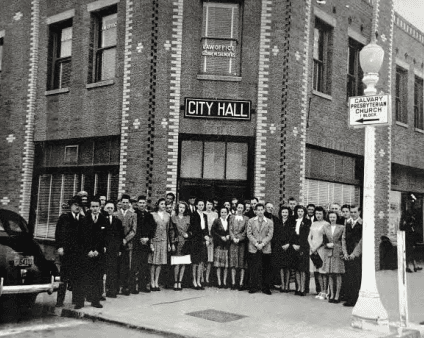
Mr. Ron Sokol recently provided an interesting account of how, in the 1960s, the City of Hawthorne proudly adopted the nickname “the City of Good Neighbors.” [“Why the City of Good Neighbors?”, Hawthorne Press Tribune, August 22, 2024, Harald Publications]. The story of how the town of Hawthorne became a city may be a little more awkward. Though some of the details of events that took place from ninety- to more than a hundred years ago have been lost, an outline remains:
About 2,000 people were living in Hawthorne by 1921 and many of them had begun to think about incorporating their community as a city. There were definite advantages: residents (or their elected representatives) would govern their affairs directly according to their needs, rather than relying on the Supervisors of Los Angeles County. They would have the power to create a municipal code, to levy some taxes and fees for general funds, public works and services, to raise capital through various means and to control spending as they saw fit. The principal disadvantage was that the residents would have to pay to operate a City government, its services and public works, potentially at a higher tax rate than they had paid to receive them from the County, thanks to the benefit of scale. This may be why a significant number of residents voiced opposition to incorporation when public meetings were organized to discuss the issue.
Eventually, an election on the proposal was held, the measure was carried and Hawthorne was recognized as a city of sixth class designation by the State of California and the County of Los Angeles on July 12, 1922. But opposition to cityhood festered among its opponents who sought to overturn the election result with a legal challenge (claims that erroneous descriptions of Hawthorne’s boundaries had appeared in public notices). They contested the validity of the election result in a court battle that lasted a year. The court finally ruled that a majority of voters had approved incorporation, now an accomplished fact, not to be reversed on a minor technicality.
It has been reported that two more efforts were made to reverse incorporation by bringing proposals before the voters.
In November of 1929, a petition was sent to the Los Angeles City Council requesting the annexation of the City of Hawthorne. The request was made at an anxious economic moment following the New York stock market crash on October 24th – rumors circulated that investors were jumping out of skyscraper windows. The LA City Council turned down the request. They were concerned annexation would strain LA’s limited water supply.
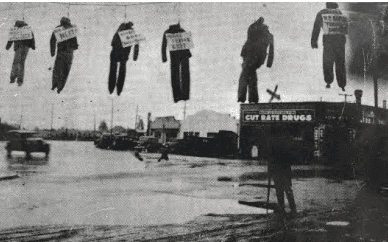
In 1934, another group forced an election to “dis-incorporate.” The measure was defeated. This may have been the occasion when citizens on one side of an issue were so aroused, they celebrated with bonfires and hung of effigies of their opponents in the streets. By this year, property taxes were delinquent on about 3,000 lots in Hawthorne. when seized by the County, many could be purchased for a nominal price. Others were rented to the indigent at a low monthly rate by a welfare board. Forty-five percent of Hawthorne residents were on relief in 1935-36, receiving federal assistance for food and shelter.
Conditions began to turn around for Hawthorne and for Americans, partly as a result of the Federal programs put in place to support the population and commerce, and partly because, by 1939, the march toward open conflict in Europe was moving the economies of many countries toward a war footing, even the neutral United States. Jobs were being created in aircraft manufacturing, oil refining, auto assembly, housing construction, shipbuilding and many of the other local industries that would eventually produce the matériel for our role in World War II.
Hawthorne started to grow again, trusted officers were installed in City government and, as the war ended, an era of prosperity, unlike any seen before, descended on the country. Opposition to Hawthorne’s cityhood had finally faded away and the city was heading toward the aspiration that was embodied in the motto it would adopt in the Sixties.