

Please . . . 🎵 Let it snow, let it snow, let it snow!
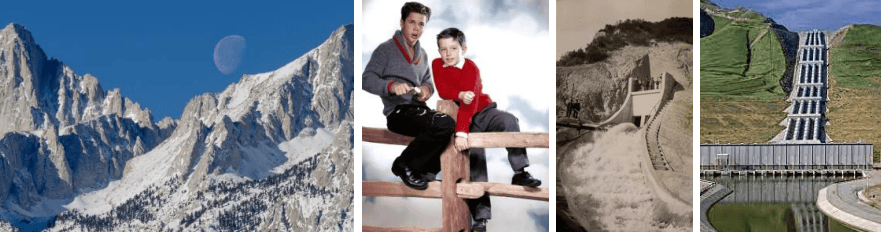
The full moon of November is commonly called the Snow Moon (though the Farmers’ Almanac likes “the Beaver Moon” — we’re going to “Leave that To Beaver”). We don’t get much snow on the flats of Southern California {see your December 2022 Newsletter, sent to you on 12/13/22}, but it’s vitally important to life here because it gives us some of the water we need.

We import more than 50% of the water we use. 24% comes from the State Water Project, one of the largest water management and power generation systems in the world. If your writer got the math right, something like 782 billion gallons annually. It gets pumped over 2,882 feet of Tehachapi mountainside to get to us, setting a world lift record. 30% of the water delivered by the SWP comes from annual snowpack, primarily from our Sierra Nevada mountain range. Predictions for this winter’s snowfall amounts in areas essential to our water supply are, as usual, as varied as the odds offered in Vegas or on the stock market.

We try to use our water carefully, taking into consideration the effort we must spend to capture it from the tiny, beautiful snowflake form some of it arrives in. A snow is something we can really look forward to, whether it falls on Mt. Shasta, Mt. Whitney, Mt. Baldy or the streets of Van Nuys, Malibu, Burbank, Pasadena, Inglewood, or at LAX. Not to mention the vast Colorado River watershed.
Let’s embrace the Chill!
Monarch Air
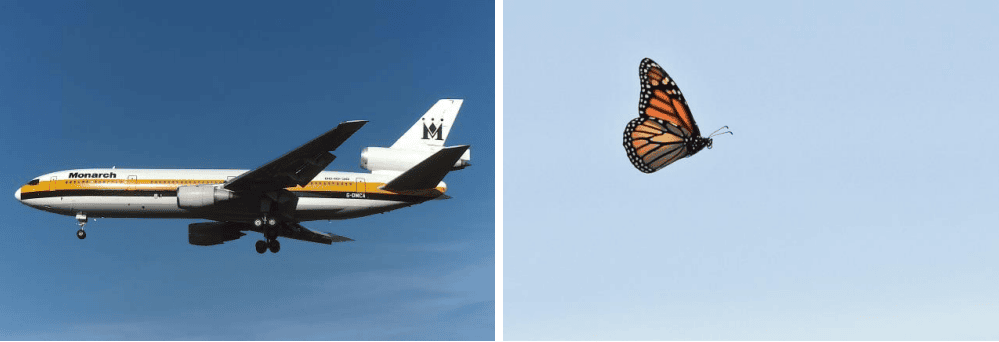
This time of year, hundreds of thousands, maybe millions, of people are making plans for- or getting started on their annual visit to the West Coast. Among their traveling companions are the Western Monarch butterflies, Danaus plexippus, who will have arrived on the coast of California by this month to stay at their overwintering sites from the San Francisco Bay to San Diego. Less famous than their relatives who live east of the Rocky Mountains and who commute from as far north as Canada to mountain resorts, mostly in Michoacán, Mexico every winter, our Western Monarchs can make a journey from British Columbia or the western slopes of the Rockies to spend the season on the golden coast of our state, resting, rejuvenating and preparing for a truly amazing return trip.
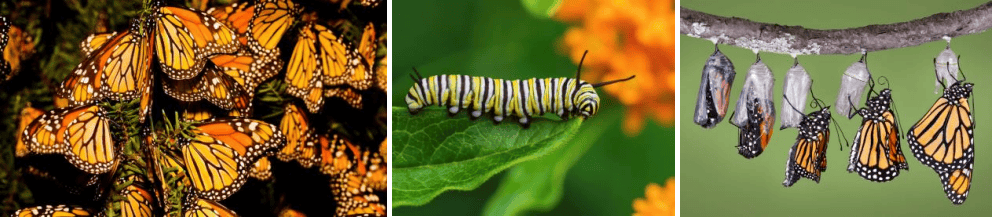
In February, they will mate and then fan out to fly back toward where their great-great grandparents came from. They will be following the spring bloom of wildflowers inland to fuel up on their way. The females will be looking for Milkweed, Asclepias spp., on which to lay their eggs it’s the only genus their larva can eat. The butterflies will die before they reach their destination — in fact, it will take four or more generations for the Monarchs to arrive at their origin and feast through the summer on the floral banquet.
The great-great grandchildren will be a special generation. They will have the stamina to make the return trip to the California coast. Humans can send our species to the Moon, but we haven’t yet discovered how a one-half gram insect can pass on the inheritance of a flight plan – as much as 1,000 miles – to its descendants, and that includes a round trip!
Western Monarch populations have diminished, mainly because humans like to use the same territory they have long inhabited. We destroy their environment and replace it with agriculture, inhabited places and infrastructure. To add insult to injury (or worse) we wantonly blow insecticide into the atmosphere. It’s finally begun to dawn on the hairless ape that we need the Monarchs – and all the other surviving pieces of the ecosystem – to keep ourselves healthy and ongoing. Otherwise, it’s going to be a cold, dim and dusty life on the Moon.
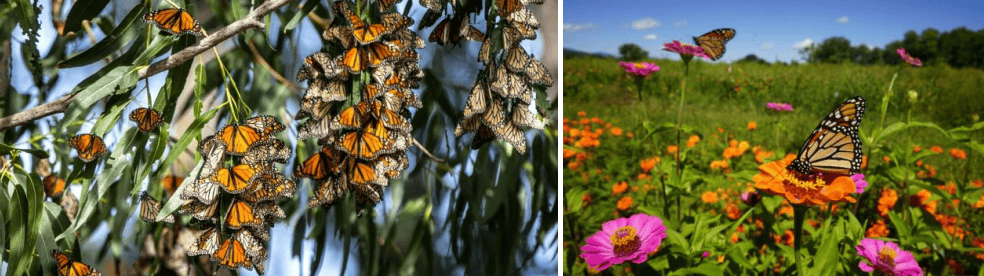
Several groups have been established to help the Monarch and have shared lots of information on the internet on how to do it. You can help. Seeing a Monarch fly across your yard will give you a lift.
“Toto, I’ve a feeling we’re not in Kansas anymore.”
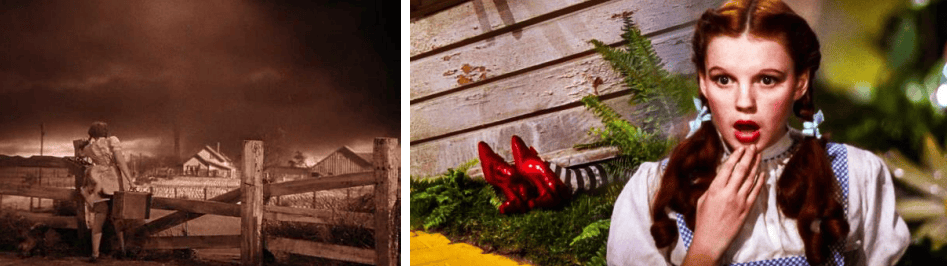
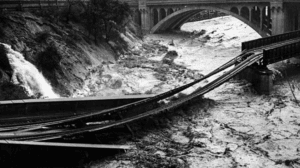
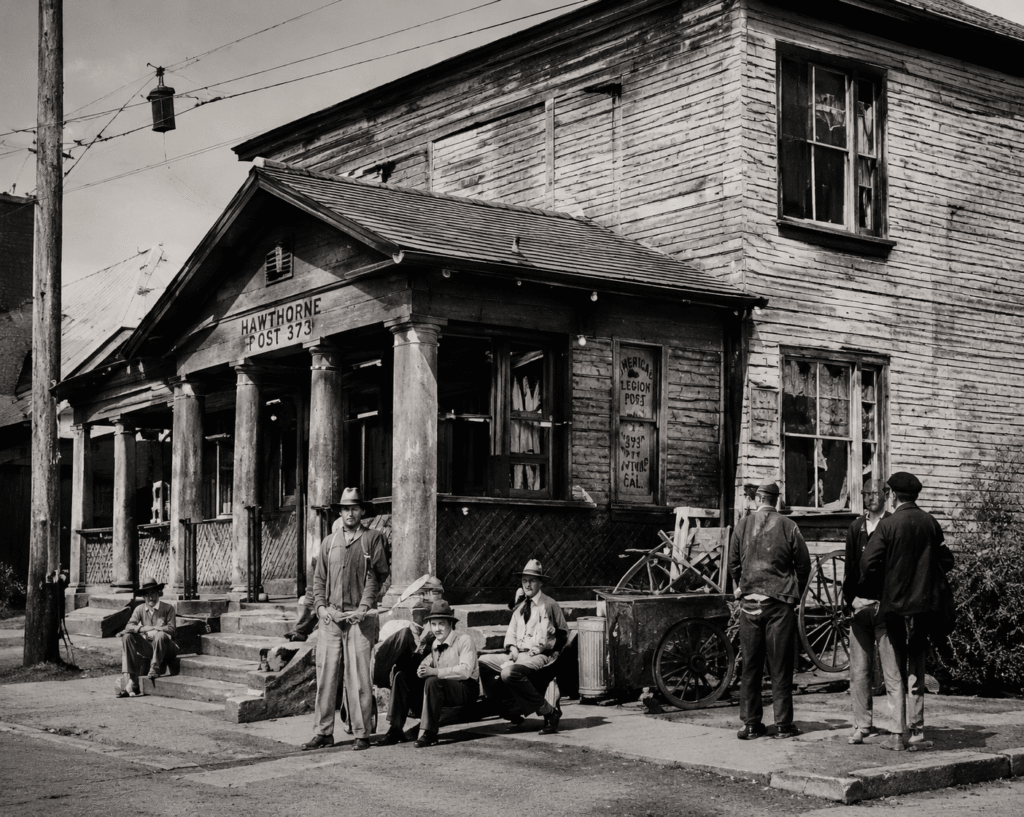
As a blasé Southern Californian, you have resigned yourself to the the inevitable “Big One” earthquake, but please take note that at least three documented tornadoes have struck Hawthorne, leaving behind major damage — on March 15, 1930, November 7, 1966 and September 30, 1983.
The US east of the Rocky Mountains is the principal territory of the tornado, but they are a lot more common in California than you might imagine. They occur in the Central Valley, the Southern Desert region and the Los Angeles area, which surprisingly, is one of the most affected parts of the country west of the Rockies. Continuing California’s reputation for marching to our own drumbeat, most of our tornadoes occur in the period of November through April, in contrast to the rest of the country’s, which occur from April through June, and ours are mostly on the low end of the Fujita (/Enhanced Fujita-) Scale of power, rated at EF0 to EF2 – rarely EF3. That is not to say that our tornadoes are not destructive.
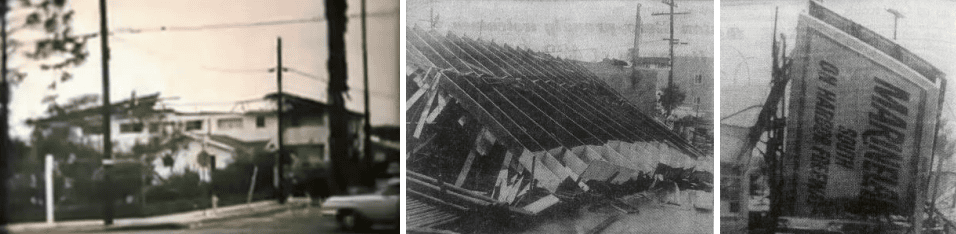
The tornado that passed through Hawthorne early in the afternoon of Monday, November 7, 1966 was one of a quartet of twisters that hit Southern California that day. It is said to have originated in Lawndale [though reporting of the time is, not unexpectedly, confused], moved northward through Hawthorne, Lennox and Inglewood, and then vectored eastward to disperse in Paramount. In Hawthorne, it passed through the “Ramona”-/Ingledale Acres Tract and then up Eucalyptus Ave, toppling trees, ripping off roofing material and tossing around unattached objects. Ramona School sustained some tree- and roof damage. It tore the roof off an apartment building at Truro Ave and 120th St. In Inglewood, it hit J & J Muffler Shop, near the La Brea Ave/ Market St split, and in this instance, tossed employee C. L. Buckner into a pile of new mufflers while it tore the roof off the building. It then continued on its unusually long (for California) path – about ten miles.
Earthquakes, fires, floods, now tornadoes – our intention is not to make you worry about living in a disaster hotspot. Don’t duck and cover just yet. Despite reports of heightened migration, many of our fellow Americans are still envious of the nearly 39 million people who call our Golden State – with all its wonders and pleasures – home. There’s no place like it.