“Just Play It Cool, Boy . . . Real Cool”
The next order of business is how to keep cool. A few hot days? We can take it.
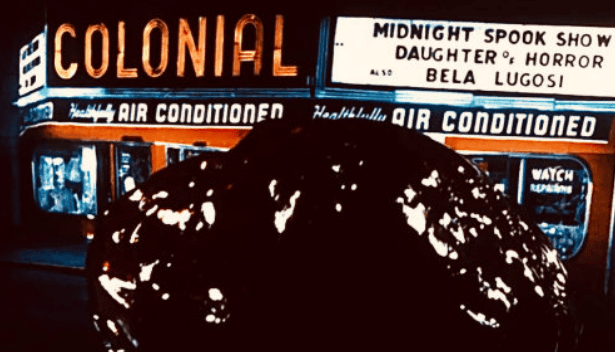
There’s air conditioning, of course, but Hawthornians have been relying on their mild climate and Mother Nature’s afternoon sea breeze since the First Peoples climbed the “Ramona” hills. Getting cooler requires water or electricity or other forms of energy – they’re always in high demand during a Southern California summer. There’s a lot more air conditioning around than there was in 1958, when the Blob took the risk of chasing Steve McQueen and other yummy humans in a cooled Phoenixville, PA movie house, but somebody has to make the electricity to run the A/C and somebody has to pay for it. And the air can be stale.
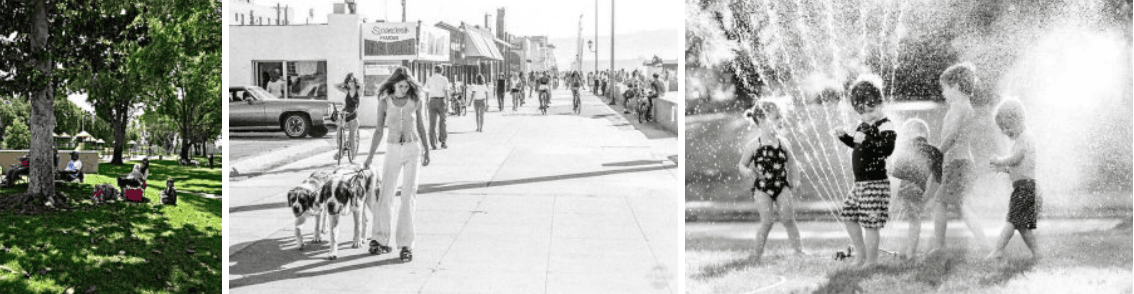
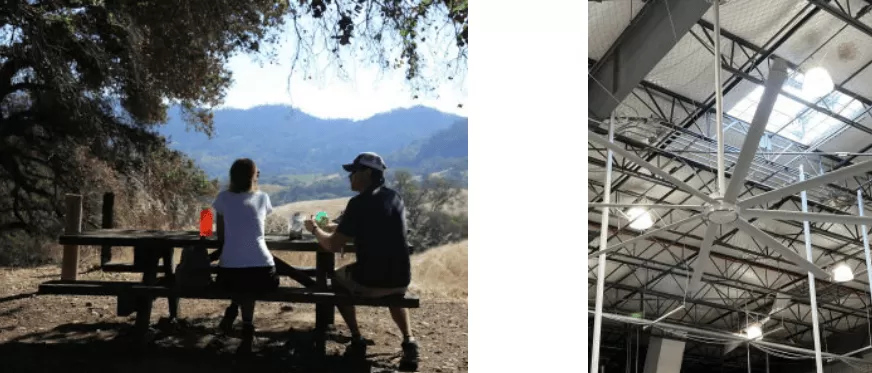
Better to use some of the tried-and-true ways to chill: a big tree to sit under, a walk on the Strand, a run through the sprinkler on the front lawn, a picnic in the mountains. Our you could just go to Costco — that’s where everybody is, anyway.
Native Son
As we head toward the day when we will choose which applicants we will hire to run our country for the next four (-more or less-) years, we have to be careful to discern the character of each one we will employ. We’ve known for a long time that the desire to hold office – and politics – will bring out the highest aims or the lowest motives, from one person to the next.
Why would a nice young man from Hawthorne want to make a lifetime’s career in government? The answer, perhaps, is that public service can be a fulfilling job for people who want to do something for others, who can bring others to accord and who can lead others toward better circumstances
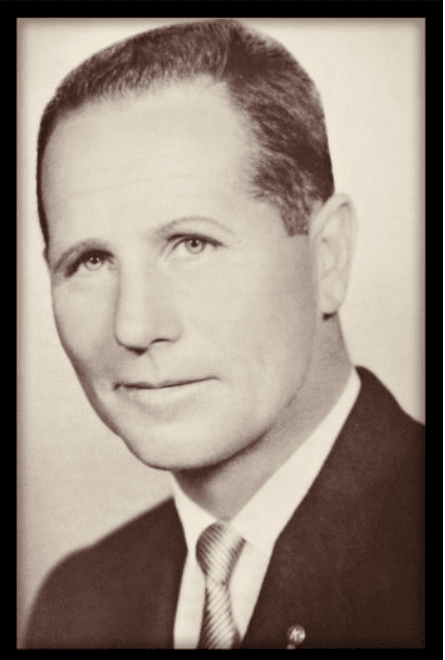
Glenn M. Anderson was born in Hawthorne in 1913. His parents were the first people to buy a lot and build a family home in the new townsite in 1906. Glenn grew up with the town, went to school in the Hawthorne School District and graduated from Inglewood High School – the only nearby secondary school at the time – in 1930. He embarked on the transition to adulthood just as Americans were beginning to experience the profound effects of the economic depression that had been triggered by the stock market crash the previous October.
Anderson found work as messenger in downtown Los Angeles and soon observed that he could earn more (messengers were paid for each delivery) if he used a bicycle. He acquired an old bike and set about repairing it with his natural mechanical ability. He next realized he could make even more deliveries with a motorcycle and could save the 30¢ fares he paid to ride the “Yellow Cars” to and from downtown LA. He found a used ‘cycle and fixed it up and discovered he really enjoyed riding, and racing in his leisure time. Fellow ‘cyclists sought him out to keep their machines running, then car- and truck owners and before long, he was operating a repair garage on Hawthorne Blvd and 119th St. [His association with this site later produced Hawthorne’s “Googie” landmark, Chips]
He found time to earn a Bachelor’s degree from UCLA in 1936 and to enter the building and real estate developing business. Encouraged by fellow lodge members, he stood for a position on the City Council and when elected in 1940, he was chosen by his fellow Councilmen to be Mayor – at 27, reportedly, the youngest in the nation. During his mayoral term, he played a part in creating the airport to serve newlyarrived Northrop Aircraft Inc. (devolved to City ownership and operation in 1948) and in securing a WPA upgrade to the City’s water treatment system. He stood for the California State Assembly seat, 46th District, in 1942, won, took his seat and then served two years in the Army Infantry as the US pursued the war against the Axis powers. He returned to the Assembly and won a second term, leaving office in 1951.
After an unsuccessful bid to become a County Supervisor, he returned to real estate development, but remained involved in the work of his party – the Democrats – while they were largely out of power in California in the 1950s. Tides ebb and flow in politics and when Anderson became a candidate for Lieutenant Governor in 1959, in tandem with Edmund G. “Pat” Brown for Governor, they were swept into office. Their popularity won them a second term, but for Anderson, the tides turned again with the outbreak of the Watts riots in 1965. LA city officials asked him, as acting Governor (while Brown was on vacation in Greece) to deploy the National Guard. The hours he used to take advice and contact leaders of the African-American community before issuing the order elicited criticism that was used against him for the rest of his political life. He lost his bid for reelection in 1966, but service in government had become Anderson’s chosen career.
Glenn M. Anderson won election to the US House of Representatives in 1968, working for the citizens of California’s 17th Congressional District*. He was re-elected eleven times. He lent his effort and support to many categories of legislation, but his forte was the creation of public works, often in the region he represented. In recognition of his persistent efforts, many facilities, structures and projects bear his name, while others stand as monuments to his work: a Federal building in Long Beach, the LA Metro Rail system, a park in Redondo Beach, the Deep Ship Channel at the Port of Los Angeles, a portion of Interstate 105, the campus of California State University – Dominguez Hills.
The end of his work and his life made its approach to Mr Anderson through the effects of Alzheimer’s disease in his late seventies. He died in 1994, leaving behind quite a legacy and an extraordinary life for a nice young man from Hawthorne.
*reapportionment, mandated by the Constitution, and redistricting changed the boundaries and designation of the Carson-San Pedro-Long Beach area to the 35th and then the 32nd District.
[Among sources for this article: Myron Roberts and Harold Garvin, Glenn M. Anderson Conscience of California, California State University Dominguez Hills Foundation, Los Angeles, 2001; Sam Gnerre, Daily Breeze News, “South Bay History: Glenn Anderson held a variety of public offices, including 12 terms in Congress,” May 28, 2024]
The Games of Summer
It takes place every fourth year. It encourages people to take sides, engage in fierce rivalry and display over-the-top patriotism. It becomes a media feeding frenzy with few equals. Though that may sound like a US Presidential election, the subject of our piece is the Modern Olympics.
In a time of imperialism, nationalism and bloody competition among the nations of the Western World, a revival of the ancient Games, conducted in a spirit of athletic brotherhood, equality and honor – and strict amateurism – was offered by Baron de Coubertin as an alternative. The Olympics have changed a lot in the last 128 years, including the two season bifurcation. Longtime Hawthorne resident, Jim Thorpe, was stripped of his 1912 wins, his records and his gold medals when it was discovered he’d been slipped a few bucks from time to time, for playing in some backwoods baseball games. This summer, in Paris, some of the most highly-paid professional athletes in the world will play in certain events without the blink of an eye – to say nothing of extraordinarily physically-gifted athletes who have been identified and cultivated by national sports-promotion organizations since childhood. They will be competing in a gathering whose character has been substantially altered to enhance the revenue that the media businesses covering it will receive.
Paris will be the second great city, after London, to have hosted the Olympics three times. Los Angeles will be the third, in 2028.
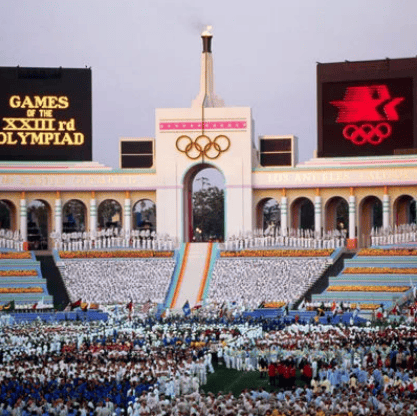
The XXIII Olympiad – the Summer Olympics hosted by Los Angeles in 1984 – faced some bleak prospects. The 1976 Olympics had left behind a heavy debt in Montreal. The 1980 Olympics in Moscow had been boycotted by many Western countries to protest the Soviet Union’s invasion of Afghanistan and, in 1984, reprisals were expected from Soviet-aligned or -sympathetic countries. Under the chairmanship of Peter Ueberroth, the Organizing Committee sought ways to make the Los Angeles Games a financial and public success. They re-used venues that had been created for the 1932 LA Olympics and many other sports facilities all over Southern California, upgrading them, when required, to the latest athletic standards.
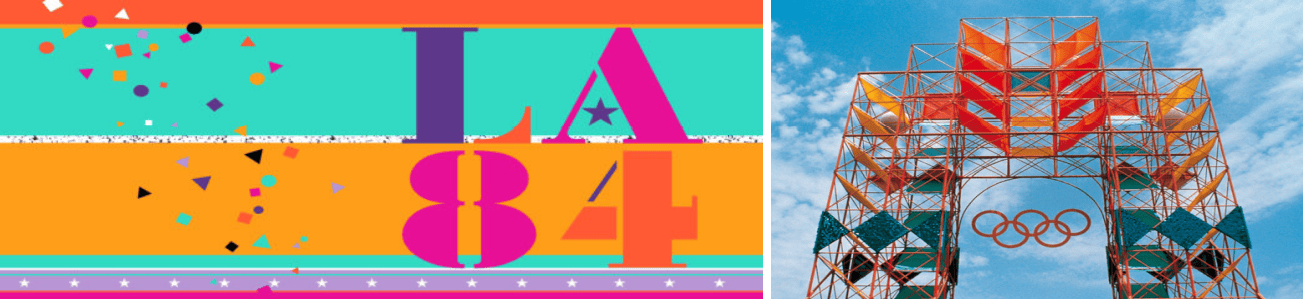
The Committee vigorously sought out corporate and individual financial investment and recruited private parties to help build and manage the Olympic facilities and support operations. Expenditures were carefully controlled. They cleverly appointed a Design Coordination team to produce a comprehensive guideline to give the LA Olympics a unique, unified look. The team of John Jered, Deborah Sussman and Paul Prezja created a bright color scheme, posters, pavilions, ticket booths, banners, signage, even the bouquets given to medal winners during the presentation ceremonies. Everything from the Rose Bowl in Pasadena (1921) to the Coliseum (1923) to an Olympic Village at USC (1984) bore colors and features unmistakably identifying them as part of the 1984 Games.
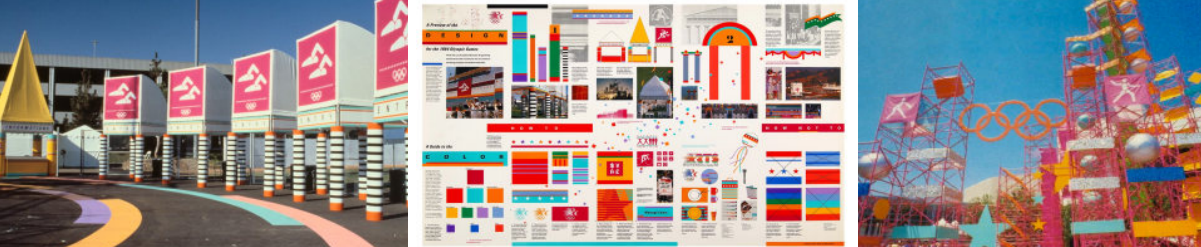
Los Angeles drew heavily on its entertainment industry to produce their own version of the many rituals that surround the Modern Games. The Torch Relay – the procession of the sacred flame from Olympia, Greece to the current hosting stadium – was routed across the US from New York City to the Los Angeles Memorial Coliseum. Communities along the way made a contribution for the honor of having the Torch pass through their boundaries, including Hawthorne. A $3000 contribution raised from the donations of local organizations, businesses and individuals allowed Reese Walton, former Council member, retired School District Superintendent and avid runner, the honor of advancing the flame along the circuitous route to downtown LA.
There, a granddaughter of Jesse Owens, the legendary gold medalist of the 1936 Berlin Games, carried the Torch into the Coliseum, passed it to Rafer Johnson, gold-medaling decathlete from the 1960 Rome Games, who ascended a steep staircase at the Coliseum’s Peristyle, touched the flame to a depiction of the Olympic Rings, which ignited and sent the flame rising to light the torch-like cauldron at the top, which had burned throughout the days of the 1932 Games.

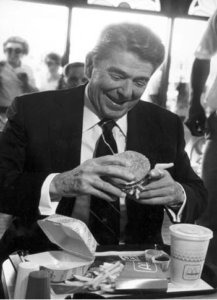
Ex-actor (and current President) Ronald Reagan declared the 1984 Games open. A band played the Olympic Fanfare, newly composed by John Williams. The many traditions followed, such as the entrance of the competing teams, and partying followed well into the night. A “Rocket Man” arose from outside the stadium and descended to its floor by means of a jet pack. Lionel Ritchie sang “All Night Long.”
The Games carried on for many days, often to sell-out crowds, including several soccer games at the 100,000 seat Rose Bowl [France upset Brazil in the final]. Athletes won medals in newly-adopted events: synchronized swimming, rhythmic gymnastics and wind surfing. The weather was fine, the freeways stayed eerily flowing. Competitors, Southern Californians, worldwide audiences, even Organizers thoroughly enjoyed it all (they made a handsome profit which was donated to establish an LA foundation to promote youth sports).
During the wistful and brotherly Closing Ceremonies, a still-baffling flying saucer, with bright lights flashing on its perimeter, descended from the skies into the bowl of the Coliseum; the spirit of loving friendship seemed to have penetrated beyond Earth.
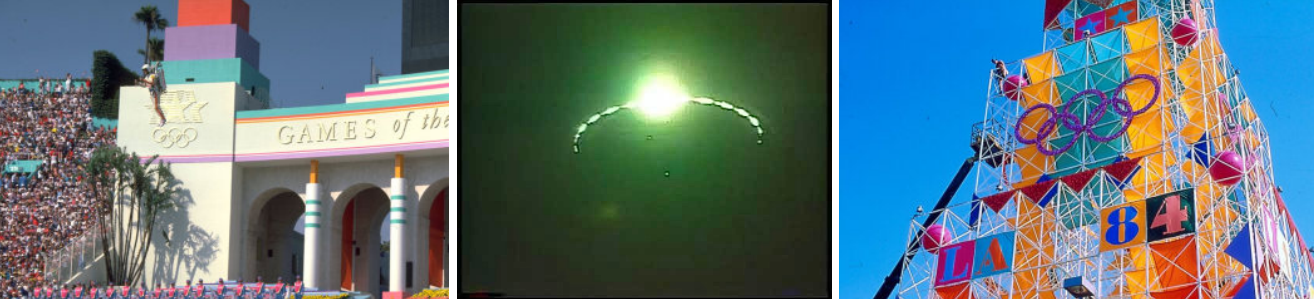
Thus, our Big Sister city and all her little handmaiden sister cities acquitted themselves well before the eyes of the world. Pins and other collectibles from the Games are still sought after. How will anyone follow this summer’s Paris Games? Southern California can always surprise.
(The Calendar of Coming Events will now be included in the Events feature on the Website)