HAWTHORNE HISTORICAL SOCIETY
PRESERVATION. COLLECTION. RESEARCH. INTERPRETATION.
April

Change is in the air this month. If you’re an early riser, the Sun is giving you a race. If you’re waiting for the day to end, daylight is reaching farther into the evening hours. Baseball Season, Daylight Savings and major religious holidays have arrived. You’ve filed your tax returns to finish off the business of last year. The weather can’t figure out whether to be warm or cool, wet or dry.
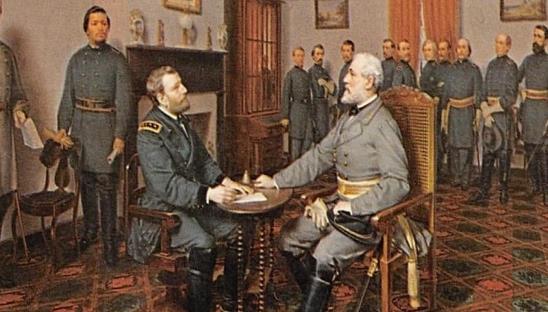
In history, great changes – for good and bad – have come in April: the American Revolution, the Civil War and our entry into World War I began in this month. An earthquake devastated San Francisco. George Washington became our first President, the first Modern Olympic Games were held and Yuri Gagarin became the first man to orbit the Earth, all in April.
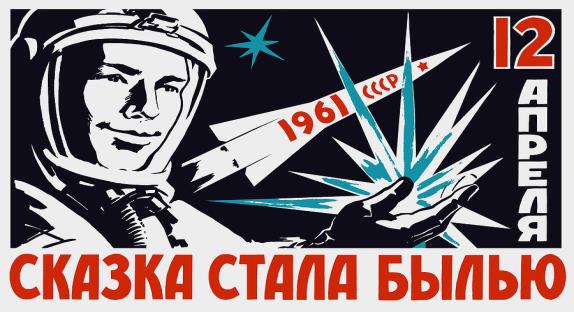
This transitioning time of the year prompts us to think about things to come. What plans should we make? What journeys will we take? What projects should we start? Fruit is setting on trees, growing toward the harvest in a later season. We’re getting in step with the rhythm of this year as the world circles around the Sun once again. It’s a satisfying feeling – we’re on the move.

For all your April Showers
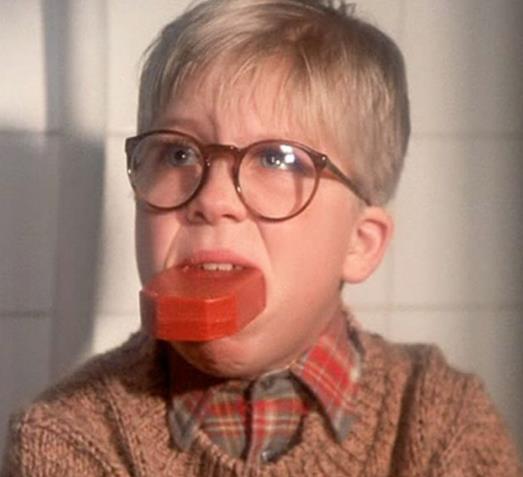
Once, it was at every sink and basin, every tub and shower, cradled in little dishes or on ribbed depressions in the sanitary ware – it even dangled from soft, over-the-neck ropes. Bar soap.
Soap has been around since the Sumerians set out to invent Civilization, about seven millennia ago. Soap is basically a compound of animal fat or vegetable oil and an organic salt – or whatever slick substitutes chemists have more recently created to serve the purpose. Together with water, it dissolves grit and grime or loosens its bond with the surface of everything from car bodies to skin. People learned to use it along with water to cleanse themselves.
Our attitude toward bathing has fluctuated through the ages. Humans embraced it as a way to enhance their health – probably, as a means to make getting together a nicer experience. Bathing as a pleasure was often the pastime of the rich and famous who could command the resources and manpower, and soap, necessary to create the experience.
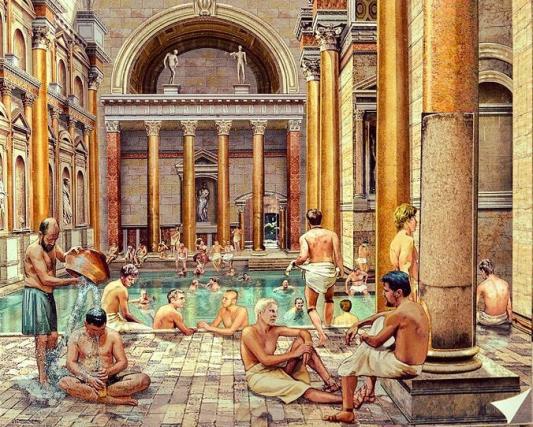
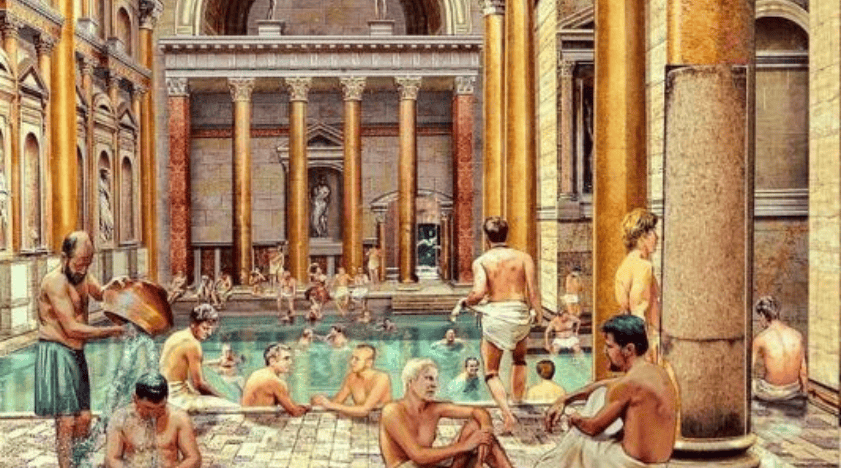
Ancient Romans made bathing a civic institution, a sort of democratic entertainment (but for citizens only) of their republican experiment. (Some of their other institutions were conquests, gladiatorial games and martyring christians) They used olive oil and a tool to scrape the grime from their bodies before bathing and credited the Gauls with the invention of soap and the nice touch of adding fragrance derived from herbs and flowers to the product. In the dismal ruins of their fallen Empire, many began to regard water as the carrier of disease and the accumulated coating on skin as Divine protection against the Evil loose in the World. Interfering with it by bathing was a transgression.
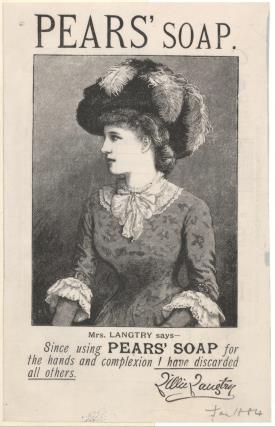
It took the Crusades and the Renaissance to ease European views on bathing. The Spaniards eventually adapted a Middle-Eastern recipe, substituting locally-available olive oil, to make a mild, light-colored “Castile” soap. [We should note that soap for bathing was not yet distinguished from soap for cleaning and laundering] Many rulers saw soap and soap making as a ready source of taxes to fatten their treasuries. English kings famously kept soapworks under lock and key and allowed their operation only under the eye of royal officials. A tax on soap was imposed in Queen Anne’s reign and was not repealed until well into Queen Victoria’s. In the face of this disincentive, Englishman Andrew Pears began to sell a clear, scented bath soap in 1807. The symbiosis of soap and the infant advertising industry began in 1882, when Pears Soap received the first endorsement of a product ever made by a celebrity from actress and socialite, Lillie Langtry.
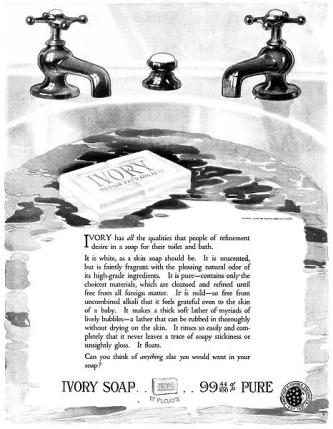
Three years before, American James Gamble, son of the co-founder of Procter & Gamble (presently, a multinational consumer goods mega-corporation) invented Ivory Soap, a white bar soap that could always be found in a tub of murky water because “it floats!”
It was joined in the marketplace in 1895 by Lifebuoy, a soap whose distinctive red, octagonal bar smelled slightly of germ-fighting phenol until Lever Brothers (now Unilever) added more appealing fragrance in the 1950s.
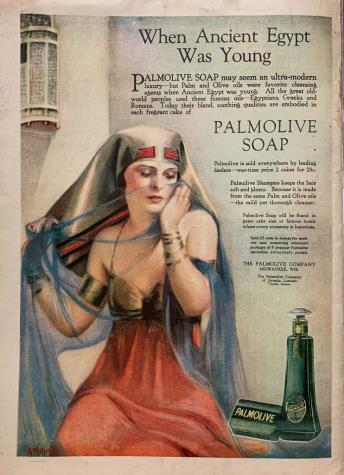
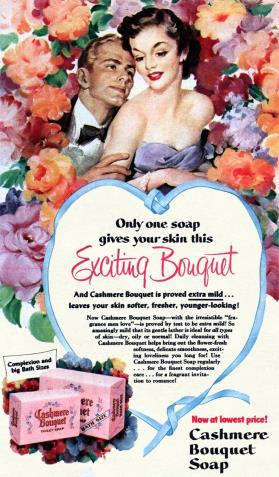
In 1898, they were competing with handsome olive-green bars of Palmolive, whose manufacturer, Colgate-Palmolive, suggested through early advertising that their olive- and coconut oil ingredients would have been chosen for “the Pharaoh’s daughter.” Colgate Co., the founding business, had introduced evocatively-named Cashmere Bouquet, a milled, perfumed bar soap, way back in 1872.
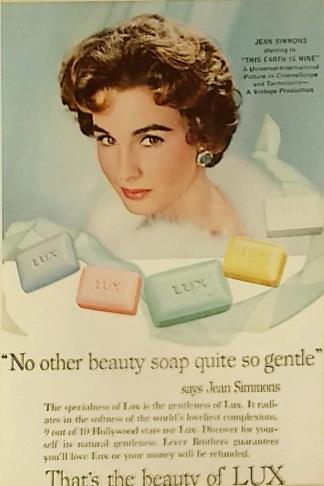
Lever Brothers added Lux toilet (think “toilette”) soap in 1925, with fragrance, (later, pastel colors) and lather to suggest fine French beauty soap, and with decades of paid endorsements by Hollywood stars that would eclipse “the Jersey Lily” (-Langtry) and the occasional Egyptian princess in recommending this brand.
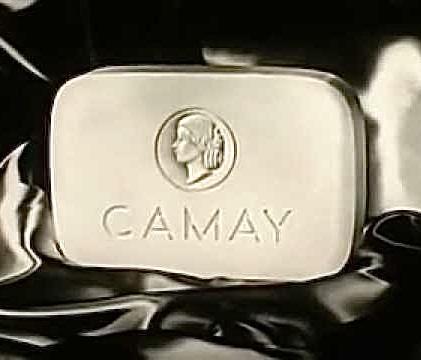
Procter & Gamble countered with Camay, “the pure, white soap . . . for beautiful women,” in 1926. American advertising was now in full-stride: in a few years, the serial radio dramas targeted at the daytime audience of female listeners – the potential buyers – would be known as “soap operas,” after their main sponsors.
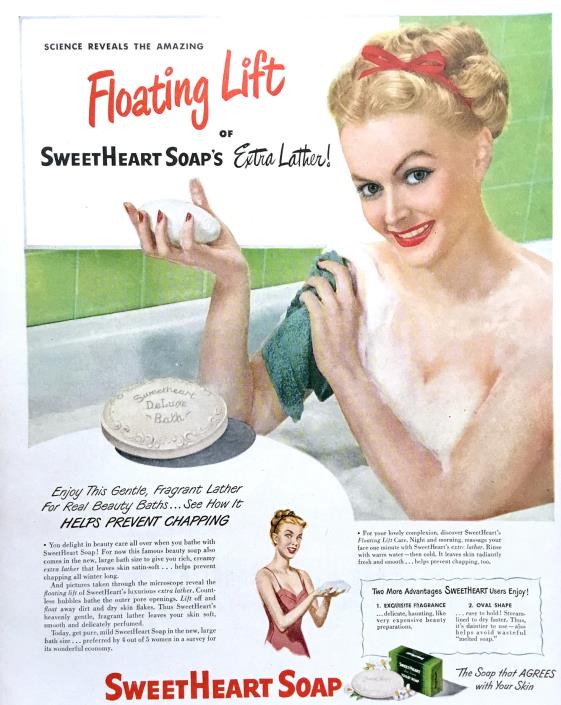
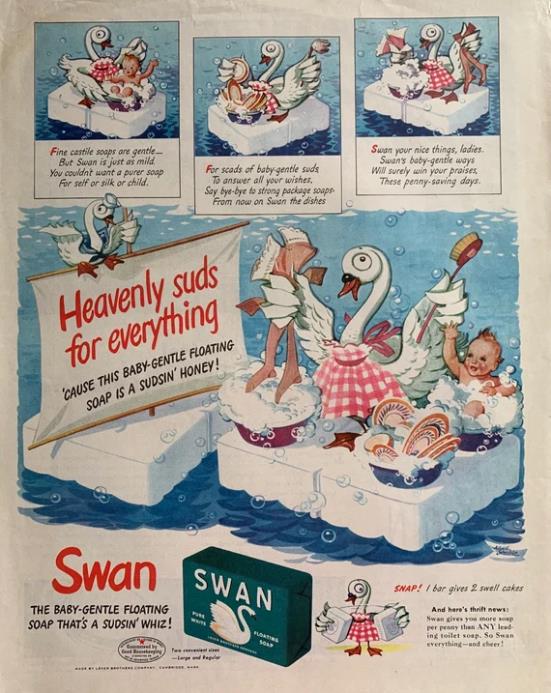
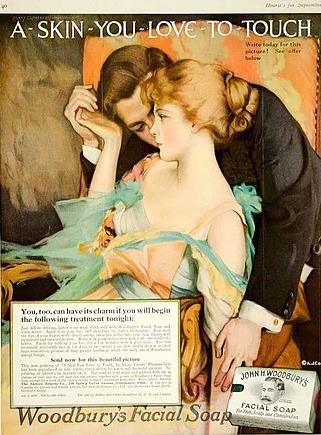
Firms that had developed leading beauty care-skin lotions had been quick to enter the “soap derby” with bars: Woodbury’s in 1870 (they were the first to suggest that their soap could enhance sex appeal – at least, as its meaning was understood in 1911), Jergen’s, with coconut oil and scent in 1882, and hand lotion-maker, Sweetheart, in 1890. In 1941, Lever Brothers introduced Swan, an apparently confused bar that was equally at home in the kitchen, at the washstand, the bathtub or the bathinette. There were even specialty bar soaps that offered solutions for particular cleansing problems. Lava was formulated with volcanic pumice powder and could render greasy, grimy “extra dirty hands really clean,” according to their 1927 ad. Introduced in 1893, Fels-Naphtha Laundry Soap was made in bar form when it was discovered it could wash away the skin irritant received from contact with poison ivy.
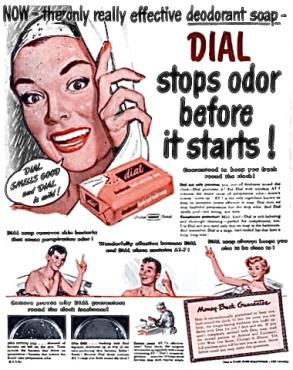
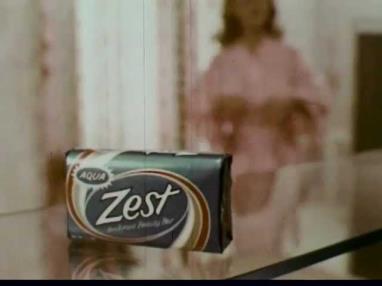
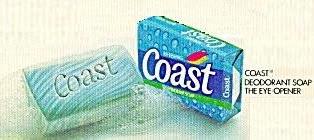
The advanced development in deodorants and our wholehearted embrace of these personal care products in the 1950s, and afterward, lead to the creation of deodorant soaps. Dial, the first (in 1949), was created by Armour and Company, the major conglomerate founded on meat-packing, who were exploring new ways to use the by-products of their original business. Procter & Gamble added personal care Zest in 1955 with components that prevented the formation of soap scum when it was used with hard water. They introduced Safeguard in 1963, which had both deodorant and antibacterial action. Colgate-Palmolive launched Irish Spring in 1972 with a very popular ongoing advertising campaign [colleen: “Manly, yes, but I like it, too!”]. P&G kept abreast of the times in 1976 when the offered Coast, “the eye opener.”
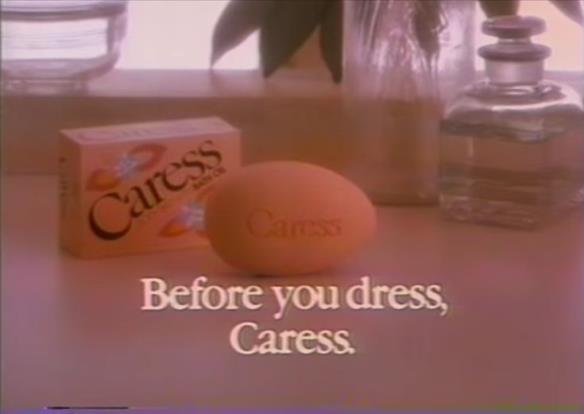
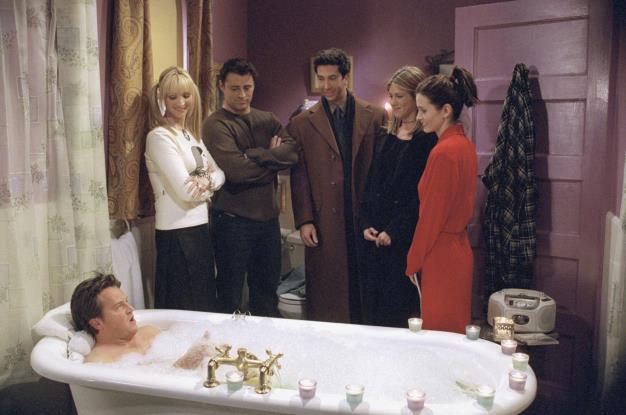
Unilever’s advance into beauty-oriented products got started with Dove in 1957 and added Caress in the -60s, but shopping mall-based boutique-brand toiletries were about to make inroads into the consumer-grade bar soap market.
Newly introduced shower gels of the 1990s made the soap-to-skin transfer faster and more convenient for we Americans who are always short of time, and bathtub bathing was becoming an anachronism. (Mr. Bubble liquid bubble bath had been subverting children’s concept of soap since 1972). The popularity of everyday bar soap began shrinking, just like the bars did, in their dishes. And of course, the Covid-19 pandemic converted us all to squirting liquid soap, out of necessity. Bar soap is now rarer in homes and is mainly the province of beauty gurus and retro-flower children-artisans, or a curious supply for camping in the wilderness, or in “mini-bar” form (not to be confused with single-serving alcohol) en suite in hotel rooms.
But while it lasted, it kept many generations clean and appealing enough to commingle in the creation of the next generations – arguably, an honorable legacy.
Taking a Bullet for Elvis

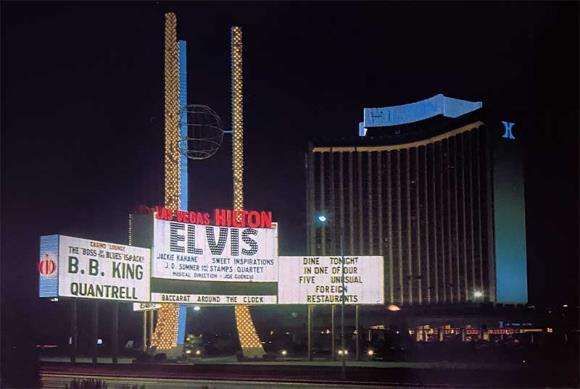
So, after years of wangling, they’re going to build a bullet train to fire us to Sin City.
Since a Beverly Hills mobster invented it in 1947, few have been able to resist the call of that “mirage” in the desert. Everyone from psychotically-paranoid billionaires, to naughty British royals, to herds of motorists migrating up the I-15 have succumbed to the promise of unfettered freedom in the baking Las Vegas Valley. Southern Californians were the first and probably remain the most vulnerable.
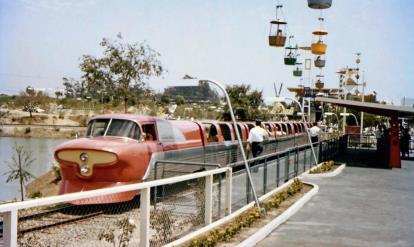
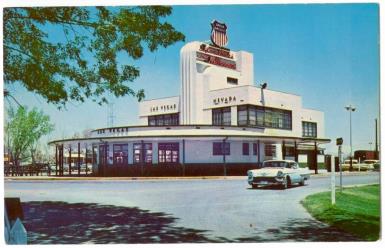
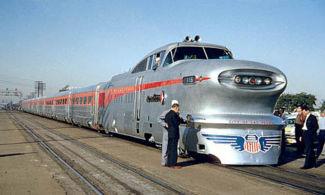
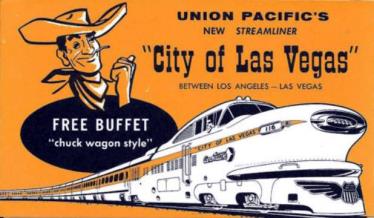
From early days, railroads were ready to link Los Angeles and Salt Lake City to the Las Vegas watering hole. By 1956, the Union Pacific Railroad was ready to offer Southern California gamblers an exciting ride in the futuristic trainset, “the City of Las Vegas,” a General Motors creation developed by their Styling department from an experimental diesel switcher and aluminum-bodied coaches based on vehicles they manufactured for Greyhound Lines, Inc. [Disney Imagineer Bob Gurr scaled down the design for the Viewliner Train of Tomorrow, a ride operated in Tomorrowland in 1957-59, until Disneyland’s Matterhorn, Submarine Voyage and Monorail replaced it]. Unfortunately, the Las Vegas “Aerotrain” service lasted only a year, as the lightweight train rode rough on the freight-dominated tracks and required the assistance of a conventional engine to summit the Cajon Pass. UP replaced the train with their standard passenger rolling stock and continued the service until 1968, renaming it the “Las Vegas Holiday Special,” with a counter-dinette car and a “Pub” buffet-lounge car in the consist.
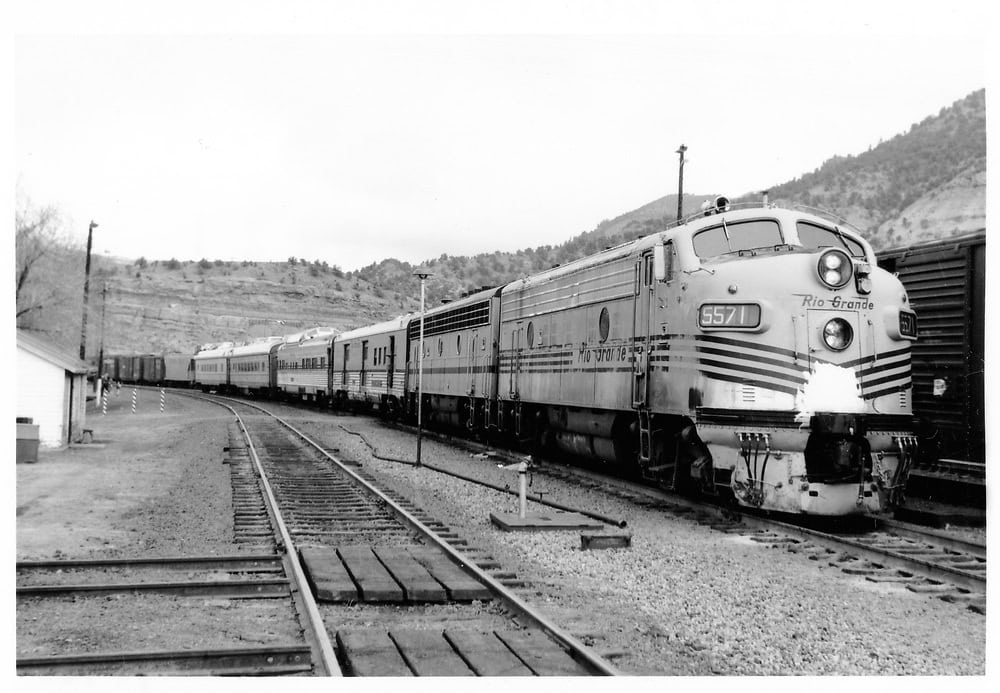
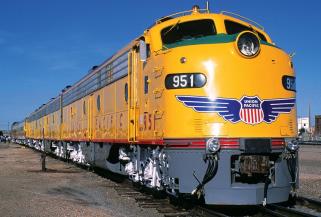
As many bus lines and airlines introduced special excursion offers for Vegas-bound travelers, Amtrak, the public corporation that took over many faltering passenger rail operations in 1971, soon looked to compete by reviving train excursions to the gambling capital. Using Southern Pacific Railroad’s “Fun Train” winter trips from San Francisco to Reno as a model, they created the Las Vegas Fun Train in 1972, providing a 231-mile long party that left Los Angeles on Fridays and returned on Sundays and become known as “the Crapshooters’ Express” during its 3-month existence.
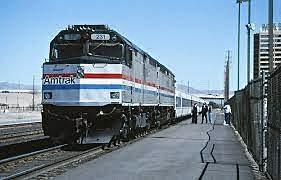
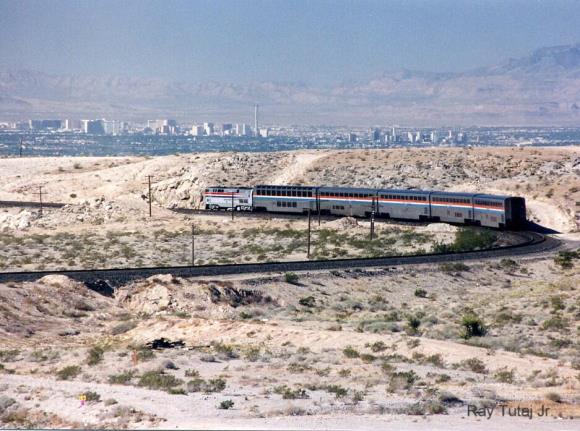
A charter company tried with the Las Vegas Celebrity Train in 1974-75. Amtrak tried again, with a contractor operating the Las Vegas Limited briefly, in 1976. After that, eastward-bound gamblers and revelers were left to ever-more-crowded airline flights or the ever-more-crowded Interstate and their own driving.
At last, Brightline has driven the first spike in a highspeed rail service that will whisk us to Las Vegas in 2 hours 10 minutes, beginning in 2028. (I wonder how long it will take to get to Rancho Cucamonga, their westernmost terminal, by then). Oh well, Life is just a Roll of the Dice. Viva Las Vegas!
Calendar of Events for 2024
Wednesdays, May 1st and May 15th
6:00 PM to 9:30 PM
Board Game Nights at the Museum
Wednesday, June 12th, 6:00 PM
Lecture Series Presentation
Gary Tomatani
Chief of the Hawthorne Police Department
-innovative ideas, improving public safety services-