

“Orange Empire”
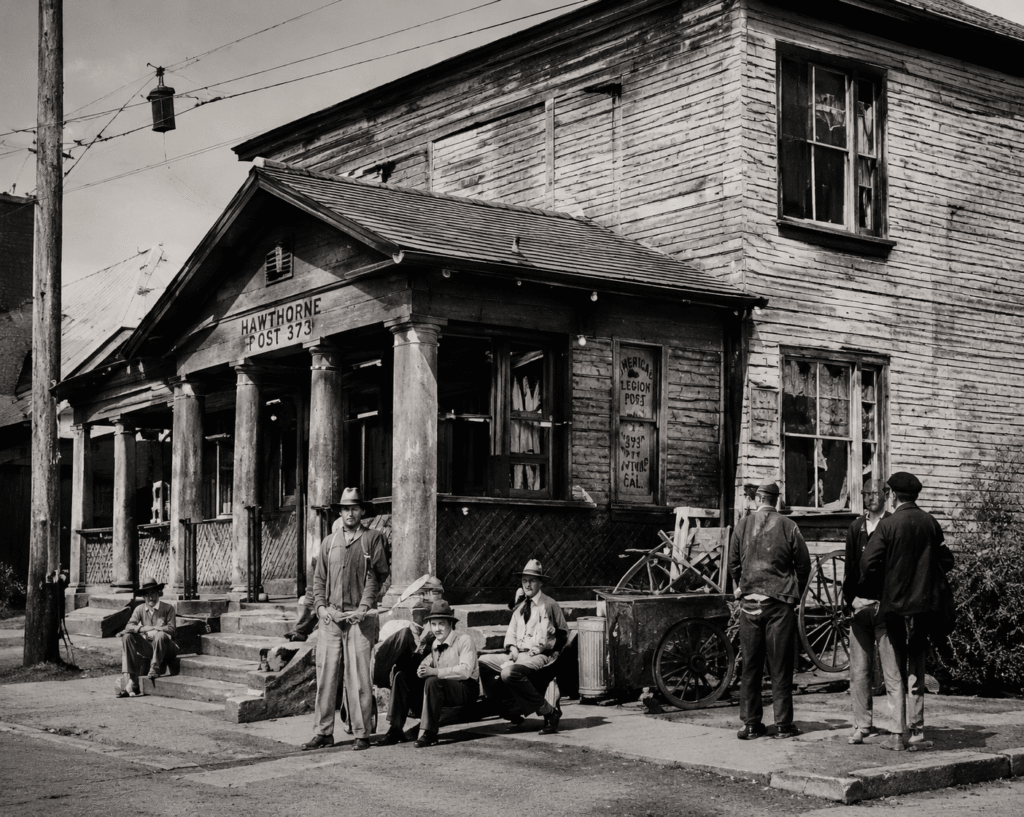
While Orange, CA got there about about 32 years before Hawthorne had a chance of being associated with the iconic fruit of Southern California (second place, Los Angeles: “the Big Orange”), the world’s most popular citrus variety is right at home in our city and oranges picked off the tree here will always put those pale, watery carpetbaggers from Florida or South America to shame. Some say oranges were cultivated on Don Antonio’s Rancho Sausal Redondo – of which future Hawthorne was a piece – and they are known to have been planted extensively on the lands when the 22,000+ acres came into the hands of Daniel Freeman in 1873. The trees thrived in our seldom-frosty climate.
By then, the bright, tart, sweet and refreshing fruit were a cherished and costly find in the Christmas stockings of Victorian children. They had come a long way to be a delicacy in much of the Western World and a valuable crop in our corner of it. Two citrus species, Citrus auranticus, the bitter or “Seville” orange and Citrus sinensis, the sweet orange, had been passed on from their motherlands in southern China and Southeast Asia to be grown in India. They were brought into the Middle East and spread to Rome and its Empire. When Rome fell, cultivation of the sweet orange perished in the West, but the Arabs kept the bitter orange growing as they broadened their domain across the southern coast of the Mediterranean to the western edges of Africa and up into Spain. Our name for the bitter orange, thought to be at its best when rendered as marmalade, is an echo of the Arab rule of southern Spain.

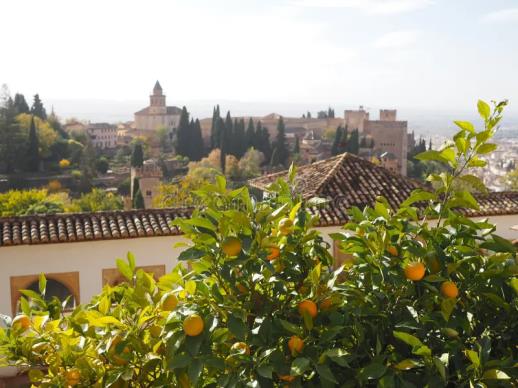
The sweet orange is so appealing, it made its way back into the welcoming climes of southern Europe in the 15th century. When Columbus made his second voyage to his newly discovered Caribbean islands and continental mainlands, he brought along orange seeds (or “pips”) to test the hospitality of the unfamiliar lands. Spanish padres brought orange trees in their consignments of edible plants to furnish their mission orchards and fields with sustaining harvests for their new lives in Mexico, Florida and the rest of the Americas. Oranges came into Alta California when the Spanish King ordered a chain of missions established in the remote northwest coast region of New Spain. The first was Mission San Diego de Alcalá, founded in 1769 and soon after, Mission San Gabriel Arcangel, in the Whittier narrows, in 1771. Oranges grown at the missions were then seedlings.
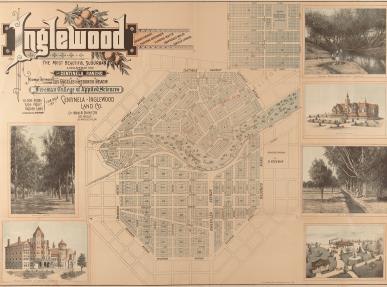
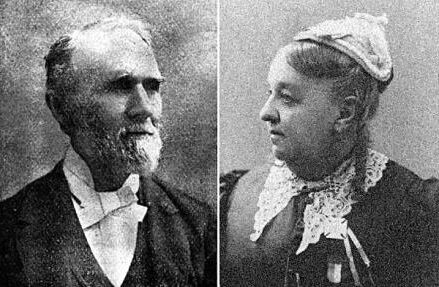
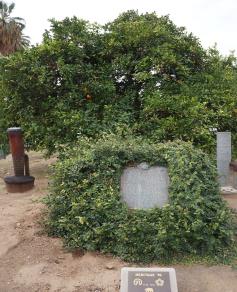
As Daniel Freeman took possession of the land that would become the South Bay, a veritable earthquake was unleashed in California’s agriculture, economy and history by a spirited and open-minded lady named Eliza Tibbets, in the community of Riverside. Eliza was born to a pioneering family of Cincinnati, OH and was instilled with the teachings of the Swedenborgian Church. She married at eighteen and soon bore a son. She joined the Spiritualism movement that swept through the country in the mid-1800s and became an accomplished practitioner, herself. She married again and moved to New York City. There, her son joined the New York Infantry and served in the Civil War. After the War, Eliza became romantically involved with Luther Tibbets, an early abolitionist. They moved to Tennessee, then Virginia, where their efforts to advance education for freedmen met with local resistance. Moving on to Washington, D.C., they joined with progressive Congressmen to advocate for freedmen’s rights and universal suffrage. Frustrated in his effort to develop a multi-racial colony where equality and camaraderie prevailed, Luther moved to California in 1870, to the place that would become Riverside. When she was satisfied with her activities to advocate for women’s suffrage, Eliza soon joined him. They “regularized” their relationship and Eliza undertook the transformation of their new home into an abundant Eden.
She is said to have been dissatisfied with sweet orange seedlings she had tried and visited Department of Agriculture Commissioner William Saunders for advice. He had been experimenting with grafts of an orange variety from Bahia, Brazil, which produced large, seedless, sweet fruit with a thick rind that formed a characteristic “navel” at the bud end. He sent two young trees to Eliza by mail in 1873. She nurtured them, irrigating them with dishwater on a property where water was limited. The trees grew well and rewarded her with what became known as “the Washington navel.” The fruit attracted the interest of other growers when it was displayed at a public fair in 1879 and the Tibbets began selling budstock from the trees for grafting (the fruit was a seedless variety). By the turn of the century, the Washington navel was the principal citrus variety grown throughout California. It lead the state’s citrus-growing industry in replacing wheat farming (on the decline in competition with countries like Russia and Canada) as one of the chief agricultural contributors to California’s economy. Citrus cultivation spurred the development of more agricultural land and new technology to grow, harvest, handle, store and ship the fruit. It was a “green” revolution in the state, initiated by a little lady in Riverside who stood as a model for the progressive “California girl.”
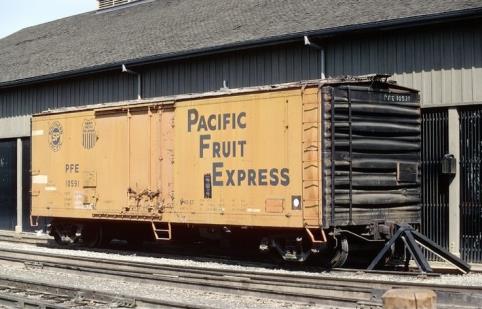
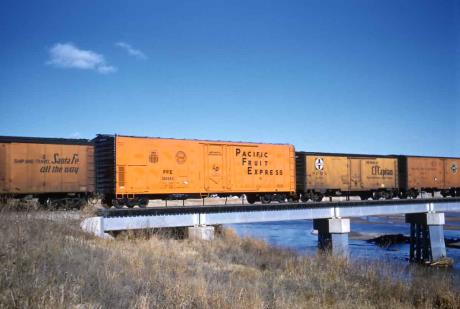
One of the “vehicles” for this economic transformation was the invention of the refrigerated railroad car in 1890 by Californian E. T. Earl, to transport fresh fruit rapidly across the country to waiting markets. The system relied on insulation and the production of artificial ice. Oranges picked in California could be offered fresh on the shelves of East Coast groceries in just a few days. The Santa Fe Railroad opened a direct route to Riverside in 1886 and rushed the first train of refrigerated fruit to the east in 1894. The Southern Pacific and Union Pacific Railroads together operated a 6,600 refrigerated railcar fleet branded the “Pacific Fruit Express.”
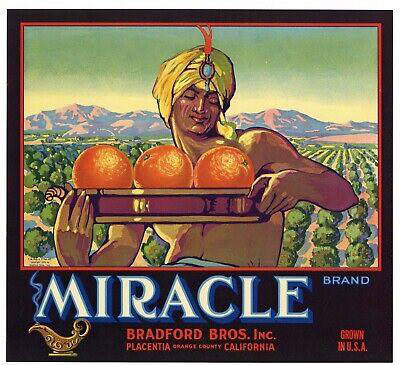
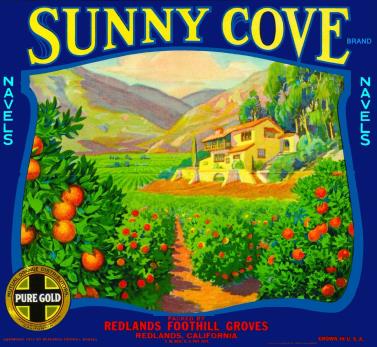
Across the state, growers formed a cooperative exchange to better manage the handling, distribution and marketing of their crop. 132 years later, the “Sunkist” name still insures the quality of the product. The “Sunkist” emblem was a mark of distinction on another innovation of the California citrus industry: the orange crate label. Growers sought out the creative energy of commercial artists to produce unique designs to distinguish their fruit on paper labels attached to wooden crates – both of a standardized size – in which the products of their toil and pride were shipped. The artists created a universe of fascinating images, from the 1880s until the crates were replaced with cardboard shipping containers in about the 1970s. The labels illustrated the lure of California and the refinement of American advertising art in an era peaking in the 1920s through the 1940s and remain collected and appreciated today.
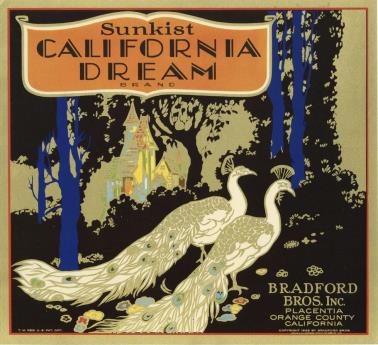

And while others were waiting to consume a freshly peeled orange from our state, Californians were accustomed to drinking a tasty glass of its juice, a healthy boost to a breakfast meal (the California-grown “Valencia” cultivar is still an unbeatable choice). Chilled orange juice is such a great refreshment, it spawned yet another business to ease life on the Left Coast. Before endless Interstates and air-conditioned, self-driving transportation pods allowed us to cross our Central Valley and eastern deserts in oblivious comfort, earthbound motorists nerved themselves up to face the drive from LA to Bakersfield, Fresno, Sacramento or Redding along the main north-south route, US Highway 99. They were eager to find shade, refreshment and temporary respite from the Valley’s summer heat. Locals saw the opportunity to provide and to profit.
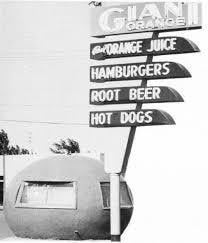
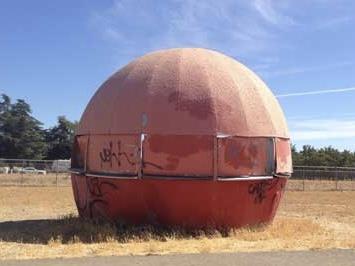
Among them was Frank Pohl, who opened the first Giant Orange drive-in in Tracy, in 1926. Noticeable over the featureless miles of cotton fields and alfalfa, the large, orangepainted, ball-shaped stand was instantly understood by drivers and passengers accustomed to the programmatic architecture, so popular at the time. Gallons of freshlysqueezed, ice-cold orange juice waited for them to pull off the road, along with more drinkables and edibles to revive them, like hamburgers and hot dogs. The Pohl family built more outlets in places like Modesto, Bakersfield and Dixon while other entrepreneurs copied the idea throughout the Valley and Southern California. The Big Oranges and Giant Oranges became mandatory pit stops for travelers who had no more resources than wet towels and window-hung evaporator-coolers to blunt the heat until air-conditioning became a standard feature in most cars. The drive-ins also became gathering places for hang outstarved local youths in the mid-century era lovingly recalled in movies like American Graffiti (1973). Federal programs that built massive ribbons of concrete highway across the land eventually bypassed the orange juice stands and changed tastes, making them obsolete. A few ghost oranges still survive, as do the sweet memories they engender.
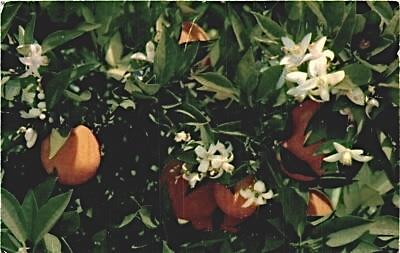
You can still make sweet memories in a new millenium. Around Southern California, orange groves survive from the time when this part of the state was truly an “Orange Empire.” With a little research and/or local knowledge, find a grove you can drive or ride through, preferably with rows of trees on either side. Take an early evening when the groves are in full bloom – usually in March or April – and make a slow progress through the grove, with the windows and sunroof open, better still, in a top-down convertible. Ah, the unforgettable fragrance! This is the magic past of Southern California, one of Aladdin’s Thousand and One Nights.