HAWTHORNE HISTORICAL SOCIETY
PRESERVATION. COLLECTION. RESEARCH. INTERPRETATION.
Harvest Moon
Late in September, a full moon will rise over the rooftops of Gardena and cast her warm light on Hawthorne. In ancient American tradition, she is called “the Harvest Moon,” coming nearest as she does to the sunset of the autumnal equinox – when the day and the night are the same length, and adding light to the sky that allowed once the harvesters to continue bringing in the ripened crops from the fields. What have we members of the Historical Society cultivated so far this year? Well, we’ve made many new acquaintances who have taken a brief or ongoing interest in the story of
Hawthorne and several who have joined us in membership. We have reunited with old friends and caught up with the latest chapters of their stories. We have heard many personal narratives of moments in Hawthorne’s past that are revelations and insights into the rich tapestry of our City’s story. We have been given many tangible artifacts of
our past, often lovingly preserved by the donors, that we can now study and share with our community. We have been given generous support in many ways by sponsors, civic agencies, officials, service organizations, businesses, private citizens and just ordinary people for which we are most humbly grateful. We have been encouraged by our fellow members and by strangers who have discovered our Society and explored our Museum and events. We have been able to reach out to one another to share some interesting aspects of the history of our community and its wider setting. We have enjoyed the company of so many congenial and interesting people.
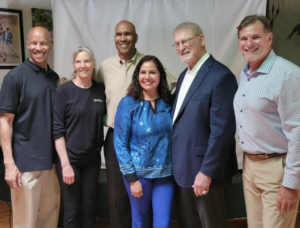
As the first night of Autumn arrives, we will welcome three people, the operators of two veteran businesses and the members of a triple-community service club to the record of recognition our Society continues to keep for those whose contributions to Hawthorne have been exemplary. This year has three more months to run and we have already seen a rich harvest.
Boom Town
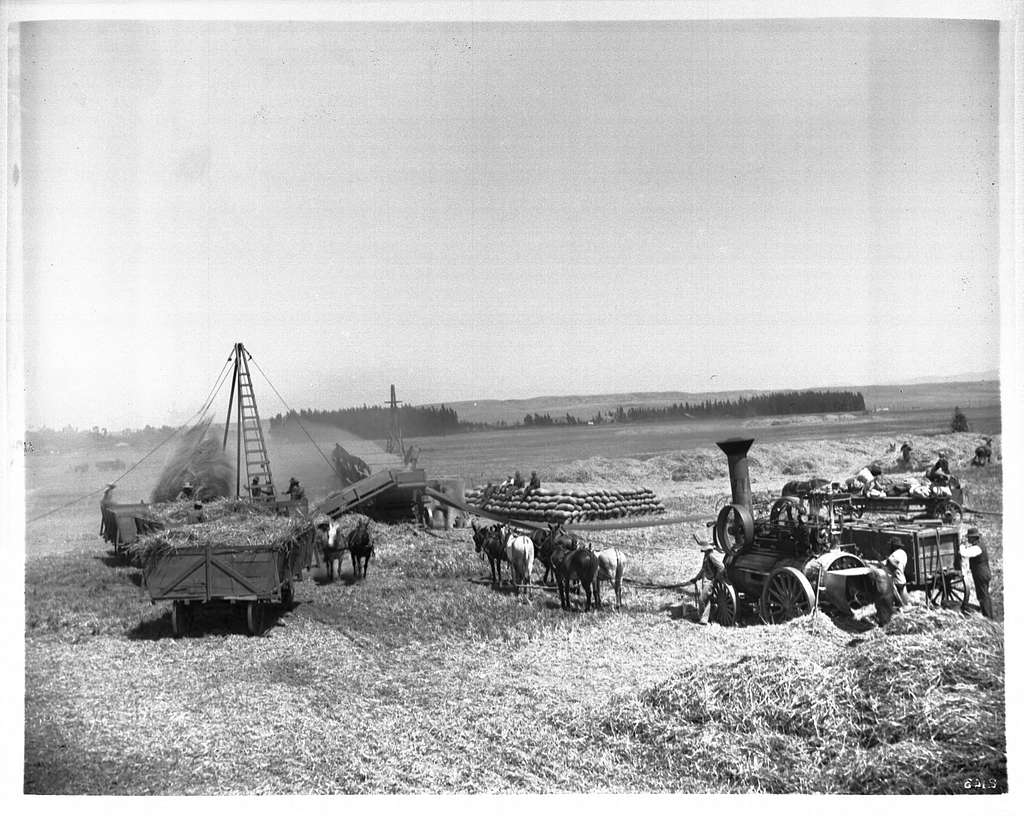
With Southern Californians always paying prices for gasoline among the highest in the country, it’s ironic that we are parking our cars atop the area that was the largest producer of petroleum in the US one hundred years ago. In 1892, the first commercially-producing well was brought in at a site in the Echo Park neighborhood. By the 1920s, producers were developing fields from Huntington Beach in Orange County all the way northward to Hawthorne, including Seal Beach, Signal Hill, Torrance and many places further inland, along the hills and mountains that defined Southern California. One quarter of the oil produced in the world came from here.
Much of Hawthorne’s oil field was established in an area just west of the city limits, part of which has remained the unincorporated “strip” of Los Angeles County while part has since been annexed by our city and by others. The first well was drilled in 1924 and in five years, an enthused contributor described the progress made in the Hawthorne Police and Firemen Pictorial, 1929, an early annual report of the City’s development, published by the Hawthorne Police and Firemen Relief Ass’n: “A new oil field, to be known as the Hawthorne-Lawndale field is rapidly developing and a veritable forest of derricks are rearing their heads to the heavens, production has already started. The oil is about 34 gravity and is a paraffine base. There is no doubt but what the development of this oil field will be one of the best in the State of California. With more than fifty rigs and many strings of tools at work, the field is getting off to as fast a start, as the recent boom at Santa Fe Springs. Some of the operators are edging in with one or two wells, while others are starting four or five. The Standard Oil Company got off to a fast start, and already has its Vance No. 1, down over 4000 feet. Its Thomas No. 1 was spudded in near the end of the week and is down over 4000 feet. This is the only company with two wells making hole. The bulk of drilling operations is centered around the area between Rosecrans and Chicago Avenues and along Inglewood Boulevard {Avenue]} The latter is the principal highway of the field, and there are more than a score of locations being rigged up within thirty paces of the road. The center of the drilling might be described as being at the intersection of Rosecrans and Inglewood Boulevards {Avenues}. The Peck No. 1, of the Smith Petroleum Company, discovery well of the field, is still making about 850 barrels of oil daily. The San Clemente Oil Company’s Peck No. 1, 100 yards southwest of the discovery well, has been deepened and a production test is to be made in it at once. Following is a list of the companies that have entered the field: American Oil and Development Company, one well; Barnsdall-Rio Grand combination, one immediate drilling; the Continental Oil Company, two wells; J. M. Cummings, one well; Dill & Comstock, one well; Earle Petroleum Company, one well; George F. Getty, Inc., one well; Golconda Oil Company, one well; James E. O’Donnell, one well; Pacific Western Oil Company, four wells; Petroleum Securities Company, two wells; Richfield Oil Company, four wells; Smith Development Company, four wells rigging and one to be started at once; Standard Oil Company, three wells; Western Drilling and Production Company, one well; Western Oil and Refining Company, two wells, and seven more locations; “We” Syndicate, one well; Hancock Oil Company, one well; Shell Oil Company, two wells; Leonard & Restopole, one well; Coast Line Company, one well; Hall Drilling Company, one well; K. G. Pulliam, Jr., one well, and Elmer Oil Company, one well.” “. . . with a climate that has no superior in the world, and now with what is predicted to be the greatest oil field California has ever seen there is nothing to prevent a growth which will bring an era of prosperity through which the progressive person, who takes advantages of these opportunities here presented, will profit most munificiently [sic].”
Unfortunately, the hyperbole the writer used to describe the attractions and bright future of Hawthorne was about to collide with the reality of the Great Depression when the stock market crashed in October of that same year. According to Robert S. Hartman, in The History of Hawthorne, 1972, “a small ‘oil boom’ along Inglewood Avenue came about during this period and several derricks inspired investors to purchase property. No one struck oil and these properties also became tax delinquent.” Hearsay accounts report that wildcatters walked away from their wells and eventually, young vandals set the wooden derricks alight – a misdemeanor that was overlooked by property developers who wanted to clear the land cheaply.
In a brief revival of the “boom,” (derived from your writer’s memory and presently defying documentary corroboration) the Union Oil Company of California drilled an exploratory well at-, or immediately adjacent to the northwest corner of the Leuzinger High School campus on Rosecrans Avenue in the late 1950s. Using the “slant-drilling” method to explore, they were legally obliged to contact property owners in the area within the reach of their boring (including southern Hawthorne) because older property titles were deemed to include subsurface mineral rights. Within a year or two, they dismantled their rig and stole off into fading memory.
Hawthornians missed the chance to become the Dohenys, Hancocks, J. Paul Gettys, Armand Hammers or Jed Clampetts of Southern California, but they grew to realize the good fortune they had in being citizens of a pleasant, progressive, friendly community – a subtler kind of prosperity.
THE SOUNDTRACK OF THE SUBURBS
From the mountains to the sea to all of Southern California. . . . . . . . . . . . . . .Every evening throughout Hawthorne, families tuned into the local news while preparing or enjoying dinner. Those more concerned with current national and world affairs waited until6:30 for Walter Cronkite or Chet Huntley to discuss national issues, but most people focused on the 6:00 local news to get weather forecasts and check in on Dodger baseball. Most local newscasts returned at 10:00 p.m. for the late local news.
Until the advent of cable in the 1980’s and the 24 hour news cycle, Hawthorne residents had five channel choices in which to enjoy the local evening news: KNXT, KNBC, KABC, KTLA and KTTV. Families in Hawthorne changed the batteries in their smoke detector more often than they changed their news source. The reason for viewer loyalty came from the personality of the newscaster. Local newscasters, from the affable Jerry Dunphy to the bombastic George Putnam, came into our living rooms nightly to report the happenings in the greater Los Angeles area. They became part of our family and our culture, thus forming the “soundtrack of the Suburbs”.
In 1960, Jerry Dunphy, a local Minnesota newscaster, took control as the lead anchor chair at the Los Angeles CBS station KNXT, where he anchored Los Angeles’ most popular newscast later titled “The Big News”, a program that often attracted a quarter of Los Angeles television owners, ratings unheard of in the market. He was still popular when fired in 1975, yet KABC sought to adopt a faster paced, “Eyewitness News” type format. It was then when Jerry joined KABC-TV, bringing it to the top of the ratings, making it Southern California’s news leader. Since Dunphy’s unceremonious firing in 1975, Channel 2, KNXT, has never recovered in the ratings. Dunphy left KABC-TV in 1989 and joined the upstart KCAL-TV as one of the pioneering anchors of the three hour primetime news format, “Prime 9 News”. He returned to KCBS-TV in 1995 and remained until 1997. George Putnam, was a pioneer television news anchorman and conservative commentator whose distinctive stentorian voice was familiar to millions of Southern Californians during his heyday in the 1950s and ‘60s. Perhaps best remembered for his “One Reporter’s Opinion” TV newscast segments, Putnam began his broadcast career on a Minneapolis radio station in 1934. More than70 years later, he was still at the microphone with his weekday, noon to 2 p.m. “Talk Back with George Putnam” syndicated program.
On KTTV Channel 11, in the 1950s and early 1960s, Putnam would conclude his 15-minute 6:45 p.m. news broadcast with his signature theatrical flair “And that’s the up-to-the-minute news, up to the minute, that’s all the news,” he would say, then add: “Back at 10, see you then!” Few people remember that Putnam was married to Amelia Earhart until her death. It is widely believed that the character of Ted Baxter from The Mary Tyler Moore was modeled after Putnam.
Beginning in the mid 1960’s the sole newscaster format became more team oriented. Most newscasters were paired with a co-anchor and lead reporters began appearing on camera to cover any “big” story assigned to the reporter. One big story could bring instant fame to a local reporter; this happened to Clete Roberts when he became the local reporter assisting LAPD with clues, to which would ultimately become “The Manson Murders”. In 1966, Roberts returned to KNXT, joining the station’s highly esteemed 6 p.m. “The Big News” broadcast and its late-night companion “The Eleven O’clock Report. Roberts joined a staff that included anchor Jerry Dunphy, Ralph Story, Bill Keene, and Gil Stratton. Roberts contributed news and feature reports and anchored the weekend newscasts. Early in 1974 he once again left KNXT for KTLA and took over the station’s hour-long 10 p.m. newscasts. After two years Roberts decided to step back from nightly television news and left KTLA; after a hiatus he joined PBS member television station KCET, contributing feature reports and commentaries. His long tenure in Los Angeles encompassed reports and travels ranging from offbeat local stories to the war in Vietnam.
Certainly, the newscaster who spent the most time coming into Hawthorne households was Stan Chambers. During his 63 years with the KTLA, Chambers covered more than 22,000 stories, ranging from floods and fires to the assassination of Sen. Robert F. Kennedy. In 1952, Chambers was involved in the first live telecast of an atomic bomb test at the Nevada Test Site. Among other stories he covered were the 1961 Bel Air fires, the 1963 Baldwin Hills Reservoir dam break, the 1971 Sylmar and 1994 Northridge earthquakes, the 1963 kidnapping of Frank Sinatra Jr., the 1965 Watts Riots, the assassination of Robert F. Kennedy, the Tate-LaBianca murders by the Manson family, and the Hillside Strangler. Chambers broke the story on the beating of Rodney King by Los Angeles Police Department officers.
By the end of the 1970’s all local affiliate stations had subscribed to the dual anchor news team format. Christine Lund joined Jerry Dunphy. After Dunphy left, Paul Moyer teamed up with Lund, who was later replaced by Ann Martin. The local newscasters who came into Hawthorne living rooms for decades became a memory. Cable news, streaming services and on-line news have replaced local news as the vehicle for breaking news and with it ended another shared experience upon which communities are built.
Deck the map with boughs of holly
Hollyglen . . . , Holly Park . . . , why are so many places and roads in Southern California associated with a non-native family of large shrubs and small trees? Well, the answer probably has deep roots ☺
From medieval times, holly was adopted into Christian symbolism, an evergreen plant (in Western Europe at Christmas) suggesting eternal life, resurrection; sharp-spined leaves – the Crown of Thorns; bright red berries – the blood of the Redeemer. Along came the philosophical, artistic and social movements of the 17th -, 18th – and 19th centuries that focused on Man, his Feelings and Perceptions and found his proper place to be in the midst of Nature. When William Penn received a Royal Charter to found a city in his Pennsylvania colony in 1682, he laid it out in a broad grid plan, envisioning it as a rural English town, with houses, gardens and orchards, rather than the teeming cities that burdened the lives of many of his countrymen. He named the north-south streets after trees, associating the new capital with the tranquility of Nature.
Afterwards, naming streets after trees was a theme often used by the creators of new places for people to live. Following that tradition more than two centuries later, the founders of Hawthorne adopted Acacia, Birch, (probably) Cedar, (eventually) Grevillea and Eucalyptus Avenues for the center of their new town, some from the seventeen-year-old town to the north. (Three holly leaves {chief} were depicted on the Burnett coat of arms)
“Holly” started growing on the maps of Southern California when Topeka realtor, Harvey Wilcox, promptly married Daeida, a girl thirty years his junior, when his first wife died of tuberculosis in 1882. With his bride, he returned to Southern California, where he and wife number one had stayed in a futile attempt to improve her health. The newlyweds enjoyed buggy rides through the Cahuenga valley so much, Harvey bought a 120-acre fig ranch there. Harvey couldn’t make a go with the fruit, so he decided to subdivide and sell off the ranch in pricey lots. Daeida-, “Ida,” had met a couple on her “honeymoon” train trip to LA who had an estate called “Hollywood” in Illinois or Ohio, and she thought the name was just grand. Inevitably, the Wilcoxes registered the new subdivision with that name in 1887.
Subsequent developers promoted the growth of the little community and in the new century, feeevading moviemakers somehow discovered it, a place that was about as far as you could get from the patent-enforcing scrutiny of the powerful Edison Trust in New Jersey. Throughout the year, Hollywood had a lot more sun, warmth and dry weather than the East Coast, so moviemaking and studios flourished along with the worldwide popularity of motion pictures and the adoration of movie stars.
By the time developers Woodruff and Shoults built a huge sign (“Hollywoodland”) as a publicity stunt on a ridge* at the top of their Beachwood Canyon property in 1923, Hollywood was the center of a major new industry and also the center of a global fantasy about glamour, fame and wealth.
For some, the fantasy became real life. When several of the most prominent studio executives and movie stars felt the need for a nearby, convenient venue to exercise their sporting blood, they joined to form the Hollywood Turf Club and found vacant land in Inglewood to build the Hollywood Park Racetrack. Board members Jack L. and Harry Warner, Al Jolson, Raoul Walsh and Mervyn LeRoy were on hand in 1938 to inaugurate the new race course, overseen by stockholders like Darryl Zanuck, Samuel Goldwyn, Walt Disney and those whose features were recognized in Inglewood and Timbuktu: Wallace Beery, Ronald Colman, George Jessel, Joan Blondell, Bing Crosby, Ralph Bellamy, Irene Dunne. For the next seventy-five years, Hollywood Park was the place to see stars and be seen, and the cachet of Hollywood had spread almost to Hawthorne’s borders.
At a short distance to the south, a new neighborhood, Holly Park, seemed to bear a shorthand association with the famous racetrack when homes went on the market in 1955. To the west of the City, the evergreen was incorporated in the compound name of a residential development, Hollyglen, that was being marketed at about the same time. In time, the residents of both enclaves would choose to become a part of Hawthorne.
The familiar symbol of holly has persisted in our culture for a great many centuries and it should be no surprise that it appears in the names of five communities and at least forty-nine roadways of Southern California, where it is an exotic plant. Even toyon, our beautiful large shrub native to the chaparral of our canyons and hillsides – bearing clouds of red berries among handsome toothed leaves in our mild winters – must also bear the indignity of being called “California holly” . . . That’s showbiz.

*eventually referred to as “Mt. Lee” to acknowledge the first radio broadcasting tower planted there by Don Lee.
Oh, and another event that Hawthornians looked forward to each Fall – the beginning of a new television season. Every September, when kids everywhere looked forward to a new teacher, new clothes and a shiny new lunch pail, families looked forward to the Fall season and the premieres of the new television programs. Having had enough of the summer television choices (reruns, news and the Million Dollar Movie), parents and kids alike awaited the advent of new shows that the three networks would introduce. Many of these shows would disappear relatively quickly and soon be forgotten. But each year, a few of the new shows would catch on with viewers and go on to become iconic. Remember, I Love Lucy, All in the Family and Hill Street Blues began as unknown shows.
Before everyone had remote controls with “guide buttons” the only way to get summaries of new shows and viewing schedules was the TV Guide. Most homes had TV Guide on the coffee table to navigate through the prime time line-up. In September, TV Guide would introduce all the new shows in the Fall Preview issue. This issue was three times more voluminous than the regular weekly edition and would also alert viewers to upcoming changes to existing shows. Here are the covers of some of the more memorable shows that debuted during the Sixties.
Calendar of Events for 2023
Thursday, October 12th – Community Dinner
5:00 PM to 8:00 PM
Hawthorne Memorial Center, Sun Room
$5.00
Board Game Nights at the Museum
Wednesdays, October 4th and October 18th
6:00 PM to 9:30 PM
At Your House:
Tuesday, October 24th – Halloween Home Decorating Contest
Tuesday, December 12th – Holiday Home Decorating Contest
For information call 310-349-1640;
Enter at parksrec@cityofhawthorne.org
Saturday, October 28th, Halloween Spooktacular Carnival
3:00 PM to 6:00 PM, Memorial Park
Saturday, December 16th
6th Annual Winter Wonderland Spectacular
4:00 PM to 9:00 PM, memorial Park Community Center